They’re just kids wanting to go to school

Throwback Thursday: They’re just kids

In 2004, I began to develop a heart for those suffering from HIV/AIDS. I am reminded of that fact in two ways today. I am thinking of some teenagers at Hope for Life- Kenya who are AIDS orphans and I am wondering if they all had the funds to start school this fall as school started for them, as it does here.

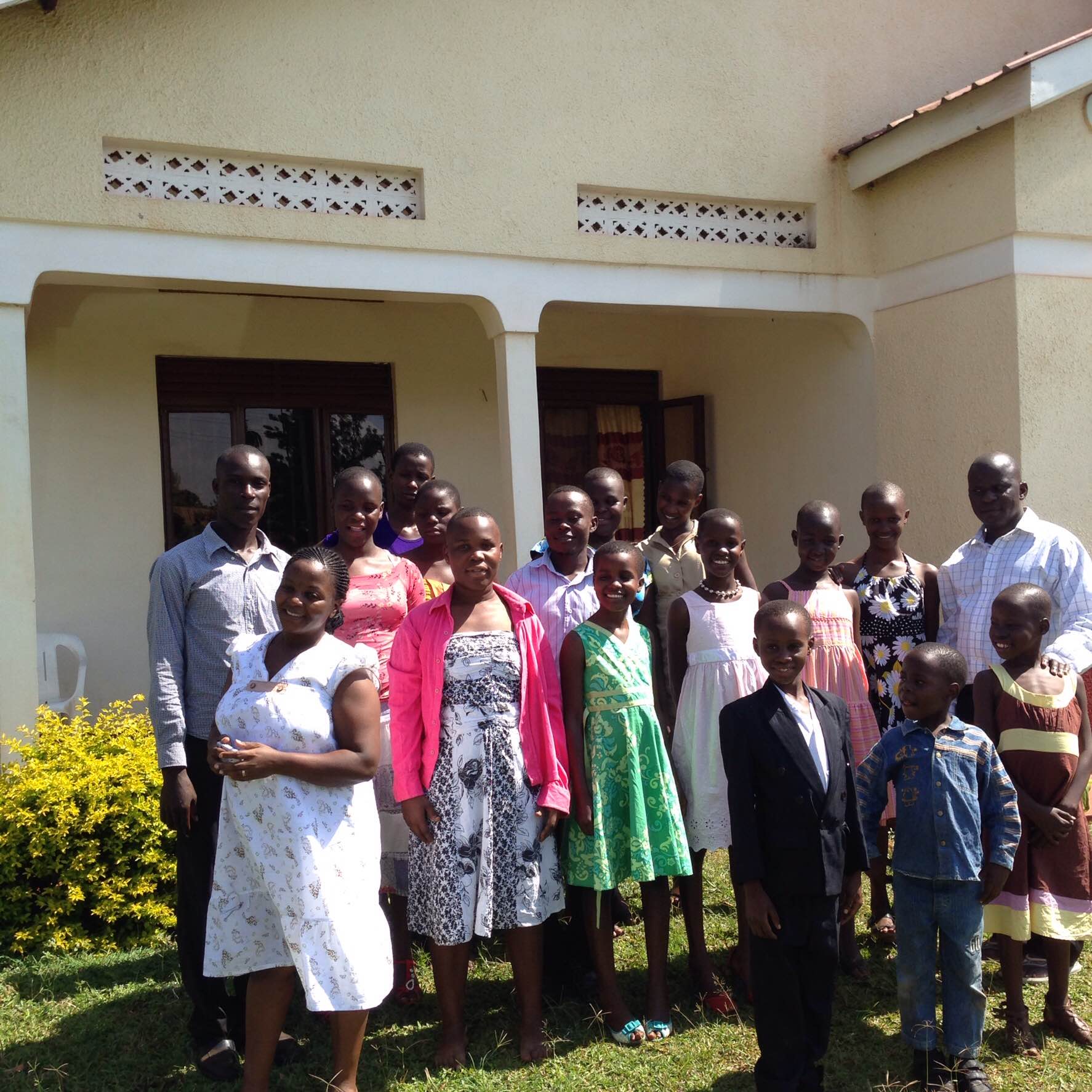
hish school students at Hope for Life

What would it be like to not have parents who can support you as you head into your teens… and your future… with no means to go to high school? The fees are high, but all these kids have tested well and qualify. These kids know what that insecurity is like. My heart breaks for those who have such an unsure future. We can do something to help. Are you able to help one of these kids?

The other reminder about how God developed my heart for those affected by AIDS in Africa comes from my dear friend and former boss at Willow Creek, Steve Haas published a piece for World Vision, where he now works as Chief Catalyst. He traces his own journey with AIDS in sub-Sahara Africa. In the early years of this millenium when mission agencies and relief organizations were first waking up to the pandemic that was infecting and affecting about 30% of all folks in sub-Sahara Africa, the church in America was barely awake. In the next eleven years, that fact changed. And the face of AIDS is changing every day. There is so much more hope.

Steve puts it this way.

Rather than attempting to charge up the mountain of Christian ignorance and stigma head-on, a sure recipe for short discussions and abbreviated advocacy engagement, we plotted a course that took the Church on a journey: passing along the story of the AIDS affected and infected children and the young families we serve. In private conversations and public presentations, and with aggressive invitations we opened up the Scripture to what has always been our call to reach out to the vulnerable and in solidarity place ourselves underneath their burden. –

Reading this article made me recall how hard it was for me, a new missions pastor at Wheaton Bible Church, to take on this challenge. We started down the information track by telling our church the facts and people listened and God opened their hearts.

There was good news by 2005 as the church gave generously and blessed our new Heart for AIDS ministry. We created a new partnership with a fledgling group of pastors and orphan care workers in Nakuru, Kenya. I could go on and on about what happened there. Revisit some former posts.  Some of you know personally as you have been there with one of the teams we have taken. Hope for Life-Kenya is still one of the healthiest ministries I know…working on behalf of its impoverished community and seeing great strides in caring for orphans, widow, and in community development.

But the good news is that, though we haven’t done it like World Vision through child sponsorships, we actually started teen school sponsorships….as of last summer, we have found 15 sponsors for kids’ high school fees. There are 15 others who need your help. Click here to learn how. 

We have taken a holistic approach to the needs of orphans and widows since 2004. And the children who came to the center we built to host after school programs and lunch time meal programs in 2006 are now teenagers doing well in school. Year after year, Hope for Life is launching committed followers for Jesus Christ into the communities who know responsibility, who know how to minister to others, who take care of their younger siblings, and who serve in their churches and communities. They are learning about God’s ways and life skills at Hope for Life that give them the courage to make good decisions and refrain from risky behavior. They are loved and cared for by adults who are committed to them. But they need our financial assistance. Please consider supporting one of these kids by clicking here. Tell a friend about supporting one of these kids. Read their stories in past pages on this blog.

My banquet of stories this summer.

When I used to sit at my desk at my church job where I helped oversee the care and support of about 90 global workers, I never became accustomed to the incredible people I met or the stories I heard. I was amazed and amazed again for those 10 years. I enjoyed a steady diet of stories from those global ambassadors.

As I got reaquainted after not seeing them for a few years, I often took them out to lunch. They often poured over the menu of American dishes that were new since their last time back and then they enjoyed the meal. But I was the one having the feast as I took in their stories. What I heard about the things God was doing in and through them aound the world left me speechless hungry for more.

wedding-outdoor-chandeliers-6

This summer I met with 5 of these friends as they came through town. Since this is no longer my steady diet… it was truly a glorious banquet. Let me share a few stories from the last few weeks… without the names or some details, as many must remain secure.

The first is a graphic designer who works with at least one hundred local workers with the Egyptian Bible Society. This guy is amazing. He loves to create and teach others how to design. This friend explained how the beheading of 21 Christians in Libya last February prompted writing a tract that has made its way around northern Africa and beyond. It has opened the way for Christians to converse with Muslims, often very ashamed of what happened at the hands of radicalized Muslims. He talked about the many responses to the tract and printing over a million copies to supply the demand.

My graphic designer friend was asked to take the following poem written in Arabic for the tract and interpret its beauty into English….I think he did a wonderful job. Pray for its effectiveness around the world, as it has been translated into at least 8 languages.

(Just click this photo and read the poem.)

Screen-Shot-2015-02-26-at-2.54.12-pm-1024x722

Next is a couple who have planted themselves in the farthest reaches of northeast Asia (get geographical). They are working as medical personnel and tour director to reach into a hostile and closed country closeby. The creativity and caution they must exercise to do this work absolutely raises goosebumps on all who listen to their stories. Their commitment and love for Jesus motivate their every dangerous step.

Another couple are working in a mideast closed  country teaching English with the goal of helping to put into words an unwritten language, so eventually there will be a Bible available. They live and work in an Islamic state that raises the stress of everyday. A trip to the grocery store is a major ordeal.

Another couple are teaching theology and Bible to 1100 national staff who minister with CRU in 20 countries of Europe. Taking seminary classes to these staffers in regular education installments allow these workers to continue ministering and not disrupt them for a foreign seminary experience that would move them from their communities, churches or campuses. Taking seminary on the road…how strategic.

IMG_2765

Valerie Elliot Shepard

The last thing I would like to tell you about was attending the Memorial Service for Elisabeth Elliot who passed away this summer. She was a personal hero of mine as I have shared on this blog earlier this summer. The passion in her convictions didn’t always make her popular, but to those of us who followed her life as a fervent missionary in the 1950’s to a woman spokesperson about a life of following Jesus regardless of suffering, I am forever marked by her conviction and her commitment.  If you are new to her, check out her website, www.elisabethelliot.org

This first link is the entire 2 hour service, well worth an afternoon.

Seated in Edman Chapel at her alma mater, Wheaton College some of my dear friends and myself were mesmerized by the beautiful tributes, ten in all. Her lovely daughter, Valerie was my favorite. But the most meaningful of all was a video tribute that we watched made with Elisabeth’s own words. Enjoy this You Tube recordings as we did. Her humor and contagious love for Jesus will mark you all over again…as it did me. CBN also did a memorial that is linked here. CBN also did a memorial that is linked here.

This summer has been rich and deep. If you have an opportunity to meet a missionary in your area, don’t miss the privilege. Just ask an open-ended question like, tell me a highlight of your work.

What happens to kids with helicopter parents?

There are many studies being done about parenting and millenials, the group born somewhere close to 1980 to somewhere close to 2000. There are a lot of studies that define millenials and they usually include something about “helicopter” parenting. I want to challenge us to look at this kind of parenting and its long term affect on young adults.

Besides my desire to influence parents (especially those of young children), I believe these principles affect our discipleship efforts of young believers in the U.S. as well as our efforts at growing the young church in the developing world. The topic crosses many spheres as it is a study from sociology and the psychological development of people. There is much at stake if we get this wrong. It’s time to think seriously about this subject of over-parenting. I hope these articles lead you to some discussion in your own sphere. I’d love to hear your comments. 

Here is an excerpt with an overview of millenials that was posted in January 2015.

A snapshot of Millenials, according to their press:

Millenials grew up in an electronics-filled and increasingly online and socially-networked world. They are the generation that has received the most marketing attention. As the most ethnically diverse generation, Millenials tend to be tolerant of difference. Having been raised under the mantra “follow your dreams” and being told they were special, they tend to be confident. While largely a positive trait, the Millennial generation’s confidence has been argued to spill over into the realms of entitlement and narcissism.  They are often seen as slightly more optimistic about the future of America than other generations — despite the fact that they are the first generation since the Silent Generation that is expected to be less economically successful than their parents.

One reported result of Millennial optimism is entering into adulthood with unrealistic expectations, which sometimes leads to disillusionment. Many early Millennials went through post-secondary education only to find themselves employed in unrelated fields or underemployed and job hopping more frequently than previous generations. Their expectations may have resulted from the very encouraging, involved and almost ever-present group of parents that became known as helicopter parents.

And another article siting many studies on the subject:

Kids of Helicopter Parents Are Sputtering Out

Recent studies suggests that kids with overinvolved parents and rigidly structured childhoods suffer psychological blowback in college.

Stressed out student in hallway of school building.

– What helicopter parenting hath wrought. Photo by Wavebreakmedia Ltd/Thinkstock

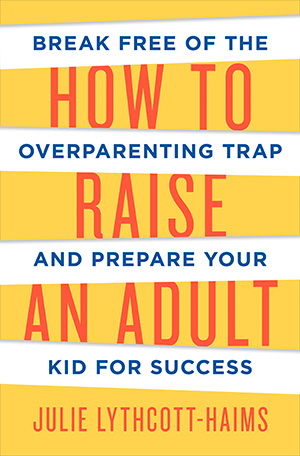
Excerpted from How to Raise an Adult: Break Free of the Overparenting Trap and Prepare Your Kid for Success by Julie Lythcott-Haims, out now from Henry Holt and Co.

Academically overbearing parents are doing great harm. So says Bill Deresiewicz in his groundbreaking 2014 manifesto Excellent Sheep: The Miseducation of the American Elite and the Way to a Meaningful Life. “[For students] haunted their whole lives by a fear of failure—often, in the first instance, by their parents’ fear of failure,” writes Deresiewicz, “the cost of falling short, even temporarily, becomes not merely practical, but existential.”

Those whom Deresiewicz calls “excellent sheep” I call the “existentially impotent.” From 2006 to 2008, I served on Stanford University’s mental health task force, which examined the problem of student depression and proposed ways to teach faculty, staff, and students to better understand, notice, and respond to mental health issues. As dean, I saw a lack of intellectual and emotional freedom—this existential impotence—behind closed doors. The “excellent sheep” were in my office. Often brilliant, always accomplished, these students would sit on my couch holding their fragile, brittle parts together, resigned to the fact that these outwardly successful situations were their miserable lives.

In my years as dean, I heard plenty of stories from college students who believed theyhad to study science (or medicine, or engineering), just as they’d had to play piano,and do community service for Africa, and, and, and. I talked with kids completely uninterested in the items on their own résumés. Some shrugged off any right to be bothered by their own lack of interest in what they were working on, saying, “My parents know what’s best for me.”

In 2013 the news was filled with worrisome statistics about the mental health crisis on college campuses, particularly the number of students medicated for depression. Charlie Gofen, the retired chairman of the board at the Latin School of Chicago, a private school serving about 1,100 students, emailed the statistics off to a colleague at another school and asked, “Do you think parents at your school would rather their kid be depressed at Yale or happy at University of Arizona?” The colleague quickly replied, “My guess is 75 percent of the parents would rather see their kids depressed at Yale. They figure that the kid can straighten the emotional stuff out in his/her 20’s, but no one can go back and get the Yale undergrad degree.”

Here are the statistics to which Charlie Gofen was likely alluding: In a 2013 survey of college counseling center directors, 95 percent said the number of students with significant psychological problems is a growing concern on their campus, 70 percent said that the number of students on their campus with severe psychological problems has increased in the past year, and they reported that 24.5 percent of their student clients were taking psychotropic drugs.

In 2013 the American College Health Association surveyed close to 100,000 college students from 153 different campuses about their health. When asked about their experiences, at some point over the past 12 months:

  • 84.3 percent felt overwhelmed by all they had to do
  • 60.5 percent felt very sad
  • 57.0 percent felt very lonely
  • 51.3 percent felt overwhelming anxiety
  • 8.0 percent seriously considered suicide

150702_DX_RaiseAdultCover.jpg.CROP.original-original

As parents, our intentions are sound—more than sound: We love our kids fiercely and want only the very best for them. Yet, having succumbed to a combination of safety fears, a college admissions arms race, and perhaps our own needy ego, our sense of what is “best” for our kids is completely out of whack. We don’t want our kids to bonk their heads or have hurt feelings, but we’re willing to take real chances with their mental health?

You’re right to be thinking Yes, but do we know whether overparenting causes this rise in mental health problems? The answer is that we don’t have studies proving causation, but a number of recent studies show correlation.

In 2010, psychology professor Neil Montgomery of Keene State College in New Hampshire surveyed 300 college freshmen nationwide and found that students with helicopter parents were less open to new ideas and actions and more vulnerable, anxious, and self-conscious. “[S]tudents who were given responsibility and not constantly monitored by their parents—so-called ‘free rangers’—the effects were reversed,” Montgomery’s study found. A 2011 study by Terri LeMoyne and Tom Buchanan at the University of Tennessee at Chattanooga looking at more than 300 students found that students with “hovering” or “helicopter” parents are more likely to be medicated for anxiety and/or depression.

A 2012 study of 438 college students reported in the Journal of Adolescence found “initial evidence for this form of intrusive parenting being linked to problematic development in emerging adulthood … by limiting opportunities for emerging adults to practice and develop important skills needed for becoming self-reliant adults.” A 2013 study of 297 college students reported in the Journal of Child and Family Studies found that college students with helicopter parents reported significantly higher levels of depression and less satisfaction in life and attributed this diminishment in well-being to a violation of the students’ “basic psychological needs for autonomy and competence.” And a 2014 study from researchers at the University of Colorado–Boulder is the first to correlate a highly structured childhood with less executive function capabilities. Executive function is our ability to determine which goal-directed actions to carry out and when and is a skill set lacking in many kids with attention deficit disorder or attention deficit hyperactivity disorder.

The data emerging about the mental health of our kids only confirms the harm done by asking so little of them when it comes to life skills yet so much of them when it comes to adhering to the academic plans we’ve made for them.

When parents have tended to do the stuff of life for kids—the waking up, the transporting, the reminding about deadlines and obligations, the bill-paying, the question-asking, the decision-making, the responsibility-taking, the talking to strangers, and the confronting of authorities, kids may be in for quite a shock when parents turn them loose in the world of college or work. They will experience setbacks, which will feel to them like failure. Lurking beneath the problem of whatever thing needs to be handled is the student’s inability to differentiate the self from the parent.

When seemingly perfectly healthy but overparented kids get to college and have trouble coping with the various new situations they might encounter—a roommate who has a different sense of “clean,” a professor who wants a revision to the paper but won’t say specifically what is “wrong,” a friend who isn’t being so friendly anymore, a choice between doing a summer seminar or service project but not both—they can have real difficulty knowing how to handle the disagreement, the uncertainty, the hurt feelings, or the decision-making process. This inability to cope—to sit with some discomfort, think about options, talk it through with someone, make a decision—can become a problem unto itself.

Madeline Levine, psychologist and author of The Price of Privilege, says that there are three ways we might be overparenting and unwittingly causing psychological harm:

  1. When we do for our kids what they can already do for themselves;
  2. When we do for our kids what they can almost do for themselves; and
  3. When our parenting behavior is motivated by our own egos.

CINDY’S Editorial comment: There are some real parallels to this parenting style in missionary work. Paternalism or over-involvement in work with locals or nationals has some of the same affects. It has been a tendency from the early western missionary history to hover to closely to nationals as they learn to lead. Let’s think about this. In missionary work, missionaries should monitor their work like parents monitor their parenting with this same list …these three points are worthy of analysing what they are doing. In 1 and 2, exchange the word “kids” for “nationals” and in 3 exchange “parenting” for “ministry”.  The following applies to both parenting and missionary work. 

Levine said that when we parent this way we deprive our kids of the opportunity to be creative, to problem solve, to develop coping skills, to build resilience, to figure out what makes them happy, to figure out who they are. In short, it deprives them of the chance to be, well, human. Although we overinvolve ourselves to protect our kids and it may in fact lead to short-term gains, our behavior actually delivers the rather soul-crushing news: Kid, you can’t actually do any of this without me.

As Able told me:

When children aren’t given the space to struggle through things on their own, they don’t learn to problem solve very well. They don’t learn to be confident in their own abilities, and it can affect their self-esteem. The other problem with never having to struggle is that you never experience failure and can develop an overwhelming fear of failure and of disappointing others. Both the low self-confidence and the fear of failure can lead to depression or anxiety.

Neither Karen Able nor I is suggesting that grown kids should never call their parents. The devil is in the details of the conversation. If they call with a problem or a decision to be made, do we tell them what to do? Or do we listen thoughtfully, ask some questions based on our own sense of the situation, then say, “OK. So how do you think you’re going to handle that?”

Knowing what could unfold for our kids when they’re out of our sight can make us parents feel like we’re in straitjackets. What else are we supposed to do? If we’re not there for our kids when they are away from home and bewildered, confused, frightened, or hurting, then who will be?

Here’s the point—and this is so much more important than I realized until rather recently when the data started coming in: The research shows that figuring out for themselves is a critical element to people’s mental health. Your kids have to be there for themselves. That’s a harder truth to swallow when your kid is in the midst of a problem or worse, a crisis, but taking the long view, it’s the best medicine for them.

Excerpted from How to Raise an Adult by Julie Lythcott-Haims, published by Henry Holt and Company, LLC. Copyright © 2015 by Julie Lythcott- Haims. All rights reserved.

Before You Pack Your Bag, Prepare Your Heart

During my short term mission “Camelot” years at Willow Creek during the early 90’s, I had the task of writing curriculum for the then 5-10 short term mission (STM) teams that Willow sent to Mexico. It was daunting as I couldn’t seem to find too much help in finding good material to prepare our teams. So like many, we wrote our own.

Yes, I had been on many trips myself and had just returned from Kenya with my family for a whole year of serving as short termers. During that year we hosted many short termers in our home and realized that some struggled to adapt and some did well. Most admitted that they felt unprepared for their experience.

img062 - Copy

Our family visiting a Kenyan family in their home

For about 8 years my church team was preparing about 25 serving teams to serve each year. We used many versions of curriculum that we edited and reworked. In 1999 I decided to publish what I had worked on. Today that Bible study guidebook, Before You Pack Your Bag, Prepare Your Heart, published by STEM Press, has sold about 100,000 copies. It is still the biggest seller in mission history of a STM preparation guide.

Prepare Your Heart

I am so grateful that youth pastors and church missions programs don’t have to start from scratch as we did back then. But most of all I am grateful that teams are going out with a solid orientation and a challenge from God’s Word. They have begun their journey into mission work with preparation in areas that challenge them to realize that the “how” of doing their work is more important than the “what”; that we need to be Christians first, not Americans first as we approach serving in a new culture (or anywhere, for that matter). We need to understand that bringing our technology or our stuff is NOT the most important gift to bring to the people we serve. That to go with an attitude of openness and acceptance and learning about our new friends overseas will allow us to be the best servants in Jesus’ name.

Don’t forget to pray for all those going out this summer to serve. Their service does more than you might think. Most of us don’t realize that most often the hosting group so appreciates being validated and valued when Americans come to visit them, to serve their needs, and just love them. There is a mutual experience of both parties understanding they are a part of the body of Christ. Be sure you take time to ask anyone you know who has gone, what they have learned.

Elisabeth Elliot, a woman to encounter

How do I begin to share the impact that Elisabeth Elliot had on my life. Her influence will live on in me though she is now in heaven, as she entered the gates yesterday morning. She inspired my youth, my middle years and to this day. 

pendrawing

It seems that I can’t remember ever not being influenced by her story, her writing, her speaking…her life.  Since I can remember I have known her story…of her husband and fellow Wheaton College buddies all pursuing their call to missions by joining a team to reach an unreached people group called the Auca Indians in the jungles of Ecuador, who though seeming to accept their friendship ended up killing all of these 5 young men. The story emerged into my childhood reality in the mid-50’s when it happened. 

images

When I was in high school in the late 60’s, I heard talks given by many of the 5 martyrs’ friends at Youth for Christ camps and rallies…that story of their sacrifice and their desire to reach out to stone-aged people to bring them the love of God, did more to influence my desire to give my life to missionary work, than anything else. God used their commitment to challenge me and helped me give myself to be available to God, whatever the cost. There is no age too young that God can’t speak powerfully to our hearts.

I read Through Gates of Splendor one high school summer and it inspired me to follow Jesus and be obey His call. It continues to be my favorite missionary story and it was my introduction to Elisabeth, not only as one of the wives of the 5 martyrs, but a significant writer and thinker. Please enjoy the CT article about Elisabeth Elliot.

 I could hardly believe that I would be my home church’s first short term missionary and spend a summer in Quito, Ecuador. We flew to a neighboring group of Ecuadorian Indians landing on a dirt air strip and met those who were kin to the Auca Indians. I was able to visit Shell Mera and see the room where the martyred women and children, including Elisabeth Elliot and daughter Valerie, sat when they received the news that their husbands were taken from them and their children. Two of the Saint children would live in my hometown during high school and become friends. God allowed me to be drawn into this story physically.

 imagesWhen I started my college education, I entered Moody Bible Institute as a Foreign Missions major, most surely because of the influence of this story and how God used it in my life. I found a copy of Elliot’s book, My Savage, My Kinsman which was my next eye-opening story of living with the Aucas after she was widowed by them, stretching my  mind that the savage killers of her husband would eventually become her kin, her family in Christ. Amazing. I was at Moody Church when Elisabeth brought one of her Auca “sisters” to the U.S. and shared the story of their friendship and new faith in Jesus Christ. God pressed Elisabeth’s story and her commitment onto my heart.

The next mind-bender was another of Elliot’s strong books called No Graven Image, a gutsy, honest novel with a challenge to not allow ourselves to make missionaries into idols, as a “graven image”.  As missionaries are human beings with flaws and weaknesses,  it should be acknowledged that like all of us, people need grace. The honesty with which Elisabeth expressed her thoughts and convictions sealed my allegiance to this woman and what she stood for. I relished everything she wrote. Click here to read some famous quotes. She challenged the conventions of our Christian culture in many new ways. 

As John Piper wrote yesterday, ‘she called young people to come and die. Sacrifice and suffering were woven through her writing and speaking like a scarlet thread. She was not a romantic about missions. She disliked very much the sentimentalizing of discipleship.

She said, “We all know that missionaries don’t go, they “go forth,” they don’t walk, they “tread the burning sands,” they don’t die, they “lay down their lives.” But the work gets done even if it is sentimentalized! (The Gatekeeper)

In 1976 my new husband and I would hear her speak at InterVarsity’s Urbana Missionary Conference. She was the first woman to speak at Urbana in 1973 and again in our year. That crowd of 25,000 college students loved her. Her inspiration and influence is impossible to comprehend. We were challenged in new ways to give ourselves to God and not consider taking our lives back, as they were far safer with Him. I saved the cassette tape of that talk and listened to it many times. It is still in my collections. Take a look in a google images search for Elisabeth Elliot quotes. You will be ministered to by her.

I wish I could put my finger on some old journals from those days, But as her home-going was yesterday, I want to post my memories now. I may revisit her influence on my life again, but I will share that my youngest daughter has this icon’s name as her middle name, spelled as her parents named her, “Elisabeth”. I wanted her influence to be remembered in my family.

Elisabeth’s mark on many young womens’ lives could be summarized by her beginnings, that a young graduate of Wheaton College committed her life, her talents and marvelous intellect to go and serve an unreached people group in Ecuador as a single women. The courage and commitment raced into the hearts of those of us who heard her story. A few years later she married one of the most incredible, singularly focused young men, Jim Elliot, her equal in every way. Through Gates of Splendor and Shadow of the Almighty were her accounts of their short life together. Her later book about her husband, The Journals of Jim Elliot, inspires all who read it, and especially affected my husband, Jim in his early years as a believer.

The most amazing thing happened as she aged. As she challenged women in her later years, she suggested that we live lives of godly femininity instead of lives influenced by a version of feminism,…some of us smiled. She had already set such a high bar for women to step up to live abandoned for God and sacrifice for His cause, giving of ourselves for the gospel in the most independent ways. It seemed to me that her message didn’t need an addendum. Her legacy was already established. She had given us freedom and wings that the world could not define by a label. Her example pushed us to be women who identify our God-given giftedness and in obedience to Him, develop our gifts so that He could use us for His purposes and His glory. Hopefully we have passed that along to our daughters and the next generation of women desiring to follow Jesus. 

We watched her life. She lived many lives as a woman in the spotlight…a wife of three incredible men, (losing two of them to premature death). She was a mother of one, eventually a grandmother to eight. She was linguist, jungle missionary, prolific writer, powerful speaker, and eventually radio personality. The diversity and impact of her life seems overwhelming to me. Her impact was felt in her generation, my generation, and many younger generations to come. May her death allow us to rewind the messages now available online and read the books on our shelves…for a the gift of a fresh challenge from Elisabeth. 


Normal

What is a global outreach?

The facts are staggering. According to Frontier Harvest Ministries, in the unevangelized world, there are 20,500 full-time Christian workers and 10,200 foreign missionaries. In the evangelized non-Christian world, there are 1.31 million full-time Christian workers.

The whole enterprise is something that started with 12 men who were mentored by Jesus, the son of God himself in the small community of Galilee and its surrounds. The fact that I was given a role to play in this great world of fulfilling the great commission in an international arena sometimes astounds me. Everyone of us can play a role…by praying, giving or going. Most of all it starts with a heart of compassion and a desire to take the message of redemption to a world crying out for it. And it may begin with learning what God is doing around the world and deciding how to join Him. It’s an overwhelming task to share the good news with the world…but many churches make it a high priority in the life of their church seeing it as obedience to God’s plan to use each one of us.

I celebrate how God allowed me to play a part in one church in the Chicago’s suburbs that influences and supports about 100 of these missionaries. During the 10 years that I directed these efforts at Wheaton Bible Church we put on many events and conferences to raise awareness and enthusiasm to reach the world and it was a great ride.

IMG_3623IMG_2392IMG_5311IMG_1256IMG_1278IMG_1297IMG_2434IMG_2385IMG_2493IMG_3037

Image

On this Mother’s Day let’s remember motherless children

It’s way overdue. I promised to introduce you to some high school kids from Hope for Life Kenya. On this Mother’s Day weekend, I have been thinking about these kids. So many of them have lost their mothers to HIV and AIDS. Many fathers have either died or have foresaken the difficulties of family life plagued with illness and have left. They may or may not come back, but often don’t return until children are past school age, when the kids can take care of him. It’s a common story.

Children never stop needing a mother. God has blessed these 125 children at Hope for Life with a surrogate mother, as only God could do. The director of Hope for Life (HFL) Josephine, has become “mother” to over a hundred kids. Along with her staff helpers, she chose these kids from the neighborhood because of their dire need. She keeps track of them, visits their homes (where many have grandmothers taking care of them), makes sure they have uniforms for school. She oversees their daily food needs and their health needs. She pours her life into them. She teaches them the Bible and how to live a Christ-centered life…all with a great sense of humor and calm. She loves them deeply….all in Jesus’ name. Most come to faith in Christ personally at a very young age. Her mothering and nurturing skills are amazing. hopeforlife.juliandkellyphotos-12 The kids flock to her for a hug or ask her for counsel about life issues. They need her like every kid needs a mom. Josephine is their mom, their hero. She is my hero. I want to help her help these kids. They need our help to stay in school…no they don’t have behavior problems, but they have financial problems….you see they have to pay some hefty shillings (dollars) to go to high school…they have to pass exams and apply to high schools like we do for college.  Because of Josephine and her value of education, 31 kids studied hard and have qualified for high school.

There is a simple way to help by clicking this link to Faith and Learning International.

Anyway… let me introduce you to some of the high schoolers. Most of these interviews were taken in January by the GO Team from Wheaton Bible Church and are spoken in their own words:

Kezia has been a part of Hope for Life for nearly 10 years. Since she was a little girl she feels that getting a good hot meal every day has been very impactful on her life. As she has gotten older the other huge blessing is getting help with her school fees. Now that she is in boarding school, she comes to Hope For Life on weekends and plays piano and sings at church. She hopes to be a musician when she grows up.

Kezia

Kezia

At home Kezia helps with cooking, especially loves to make chapatis and ugali. She cares for the cows and really loves animals. At HFL she works in the garden on occasion and mostly helps in the kitchen. When asked if the girls always cook and the boys work in the garden, she laughed and said the girls try to mix it up, but the boys aren’t very good in the kitchen. She has learned to knit and dress hair at HFL and now shaves the boys heads during her vocational skill training on Saturdays.

kellylemonphotography.interviews.michael-1

Michael

Michael is 17 years old and has been a part of the Hope for Life family since he was 8. His 16 year old sister Kezia is also at HFL. He is in his second year of high school and likes school a lot, especially Chemistry and Math.  Someday he would like to be a cashier, as he is very good with numbers. On the weekends, Michael takes computer classes and electrical skills classes at HFL. He also helps with the children, but his greatest love and talent is in music playing at church either on the keyboard or drums. He loves to sing and is in the gospel dance troop at church as well. Michael and Kezia’s mother is HIV+ and there are 4 in the family. His mother ran away when the kids were young but has returned and reconciled with the grandmother. Once Michael was sent away from school for lack of school fees and he ran away and became a shepherd, but life was so difficult that he returned. He is back in school and growing into a very responsible and teachable young man.

kellylemonphotography.interviews.daniel-1

Daniel “Mbugua”

Mbugua’s  mother died when he was 4 years old and his younger sister Virginia was 2. At that time he was very sick, suffering from a severe skin problem.  After the mother died, the four children joined Hope For Life. Josephine helped with his medication to heal his skin problem. But after 6 years the father of the first 2 siblings showed up and said he wanted to take his children. He was HIV+. His older sister ran away.

Mbugua was terribly affected when his older siblings were gone and he and Virginia were left behind to live with the grandparents. Although he struggles in school because of the stressful environment at home, he graduated from 8th grade and has made it to high school. He plays the keyboard in church, sings and composes music. He is also a good dancer in church worship dance group.  Mbugua wants to be an airplane mechanic.

Josephine and Virginia

Josephine and Virginia

His sister Virginia has “adopted” Josephine as her mother and frequently leaves her grandparents to stay with Josephine. I have known Virginia since she was 4 and she has grown into a wonderful teenager with a bright and godly spirit.

God has rescued these motherless children by sending Josephine to their neighborhood. Now they are adopted into His family forever. To be adopted as sons of Jesus Christ is a concept that will take us until eternity to fully comprehend. The truth is that when I am around the children from Hope for Life Kenya, I get a glimpse of spiritual adoption from many angles. God cares about these children like the father that He is.

Galatians 4:5-7 ESV 

To redeem those who were under the law, so that we might receive adoption as sons. And because you are sons, God has sent the Spirit of his Son into our hearts, crying, “Abba! Father!” So you are no longer a slave, but a son, and if a son, then an heir through God.

Matthew 18:5 ESV 

“Whoever receives one such child in my name receives me,…”


What makes you feel loved?

From the international retreat ministry for missionary women that recently was held in Peru. One of the purposes is to love these women extravagantly for 4 days.

This retreat blog entry is a regular feature 4 times each year found at thriveministry.org

Written by Thrive staffer and friend, Bethany Hoffman

IMG_0132

What makes you feel loved?

That’s the question Thrive anticipates for global women. We try to make them feel loved often—and in all the ways we can—in the 72 hours they spend with us.

In his book The 5 Love Languages, Gary Chapman identifies five ways we express and receive love that, when spoken, fuel us for everyday living:

  • Words of Affirmation
  • Quality Time
  • Gifts
  • Acts of Service
  • Physical Touch

How do we make sure all 68 retreat attendees go home feeling loved?
We strive to be multi-lingual.

The women receive verbal words of affirmation, and sometimes with handwritten notes. It happens in small groups and during afternoon self care appointments where attendees receive haircuts, pedicures, massages, prayer, or counsel.

They experience quality time in individual and small group interactions. Each self-care appointment provides an opportunity to slow down, be heard, and pray with someone. Perhaps most importantly, the women have the space and margin to spend quality time with their Heavenly Father.

IMG_8849

They receive gifts. Each morning, there are fun surprises awaiting them. Tuesday evening they got a Taste of Home—items they miss from home but can’t readily find in their countries of service. And generous donors make the retreat itself a gift for attendees.

The women benefit from acts of service when they discover which colors suit them best or have a makeup artist play up their best features; when their hair is cut and their backs are massaged; when a pedicure looks more like a foot washing and becomes a sacred experience.

Attendees experience healthy physical touch through massage, haircuts, and pedicures, but also through the laying on of hands during prayer, and when hugging a friend goodbye who was a stranger days earlier.

We are commanded to love one another. And so we do, in all the ways we can.

Do you love the global women you know in all the ways you can?

©2015 Thrive

Our night time visitations…in 1990

It did not take long for our initiation into “life overseas” to begin, starting with the realization, about the fourth night we were there, that we were not the only ones residing in our house. We definitely had guests. It was insomnia that led me to this discovery.

Usually I am not subject to any difficulty sleeping; in fact, most of the time I am one of those people who fall asleep within minutes of my head hitting the pillow. Cindy, on the other hand, tends to just get going around ten o’clock at night, finding bedtime the perfect setting for discussing the deep and arcane mysteries of our relationship. At first, I was convinced there had to be a strategy in this somewhere,  that this was a deliberate, subversive, Chinese-water-torture-type technique all women are taught at an early age. (Clearly, when they separated us during those junior-high puberty talks, this is what the girls were laughing about in the other room.) Although there are times when I still have my suspicions, I eventually came to attribute this to nothing more sinister than differing biorhythms.

In Kenya, though, something odd happened—Cindy and I traded places. She seemed to be able to fall asleep immediately, while I often laid in bed for hours, hard at work trying to determine the exact nature of every strange sound I heard, and then resolve myself to whatever fate that sound might be heralding. Whether it be robbers or revolution, at least I was not going to be taken unaware; for every possibility, I would lie there and devise a plan. There are two essential elements to a father’s job description—provide and protect, and I guess being in such a strange place pushed the protect thing into serious overdrive. I was deeply engaged in this useless activity when I first heard it. Something in the ceiling directly over my head. Something scurrying and furtive. Something undeniably rodent in quality. Have you ever noticed how the more you pay attention to a sound in the night, the louder it becomes? My high-alert listening soon had me convinced that whatever was tromping back and forth over my head had to be about the size of a small dog. This led to visions of some “rodent of unusual size” suddenly dropping through the ceiling tiles overhead and landing on my face. As I listened even more carefully, I was soon sure there had to be a whole team of them up there, running back and forth, back and forth, back and forth, engaged in some demented version of a rat soccer game. 6Troy7jjc Just when I was thinking how glad I was Cindy was asleep and missing all this, she rolled over, pounded her pillow and muttered in an exasperated tone, “What are they wearing? Wingtips?” There was one brief moment of silence, then we both burst out laughing, one of those great, huge laughs energized by the sudden realization of a shared anxiety. We laid there, and between eruptions of laughter, hatched Plan-A calling for the use of our secret weapon.

Being the neurotic suburbanite I am, I of course anticipated vermin-oriented problems long before our departure. One afternoon back home, while Cindy was shopping, I was wasting time in Brookstone, the mall equivalent of childcare for bored husbands. Here, among the vibrating chairs and ultimate nasal-hair trimmers, I found something truly useful. It was one of those ultrasonic devices that emits sounds humans can’t hear, but rodents can….

…and even though I listened for them every night thereafter, anticipating a sneak attack, they never did come back. The mystery of where they went was only solved months later when we told our neighbors about our cleverness. They looked at each other with one of those “Ah ha” kind of looks and said that explained teh line of little furry refugees they had seen that first week, bags in hand, cotton jammed in their ears, fleeing from our home, straight for theirs.

The rest of the story is Judge family history…those mice were gone in a day…and the neighbors weren’t too happy about it…we’re still sorry, Bob and Bobbi…sort of. More stories to come on Thursdays.

unfamiliar territory cover

Judge, James (2001-09-10). Unfamiliar Territory (Kindle Locations 665-674). Thomas Nelson. Kindle Edition.

A crash course in missions

I was very involved in the beginning years of Global Connections at Willow Creek Community Church in South Barrington, IL. As an International Ministries board member we dreamed of the day when the, then 15,000 people, who called Willow Creek home would know and understand the global missions ministries that the church was engaged with at that time. I felt like often the enthusiasm of the leadership just wasn’t there to promote or celebrate God’s missionary heart from the front…to everyone.

IMG_0995 IMG_0988

Today things are very different. Call it enlightenment or the church leaders growing into something new in understanding the nature of taking the gospel to the whole world…but whatever it is….it’s amazing. God has blessed the work they are doing in Latin America, Africa and Asia. This weekend is a prime example. It’s the church’s 10th anniversary of the 3 week long Celebration of Hope. It’s an amazing conference with all the international partners there to inspire you.

The teaching this weekend is by guests, Nicholas Kristoff and his wife (authors of Half the Sky) and Pastor Oscar Muriu from Nairobi Chapel.

If you go to Willow physically or via their live streamed services, you can go or listen at 5pm on Sat., April 25 or 9 or 11:15am on April 26 or the following weekend as it closes. You won’t regret hearing the speakers anytime you can listen online.

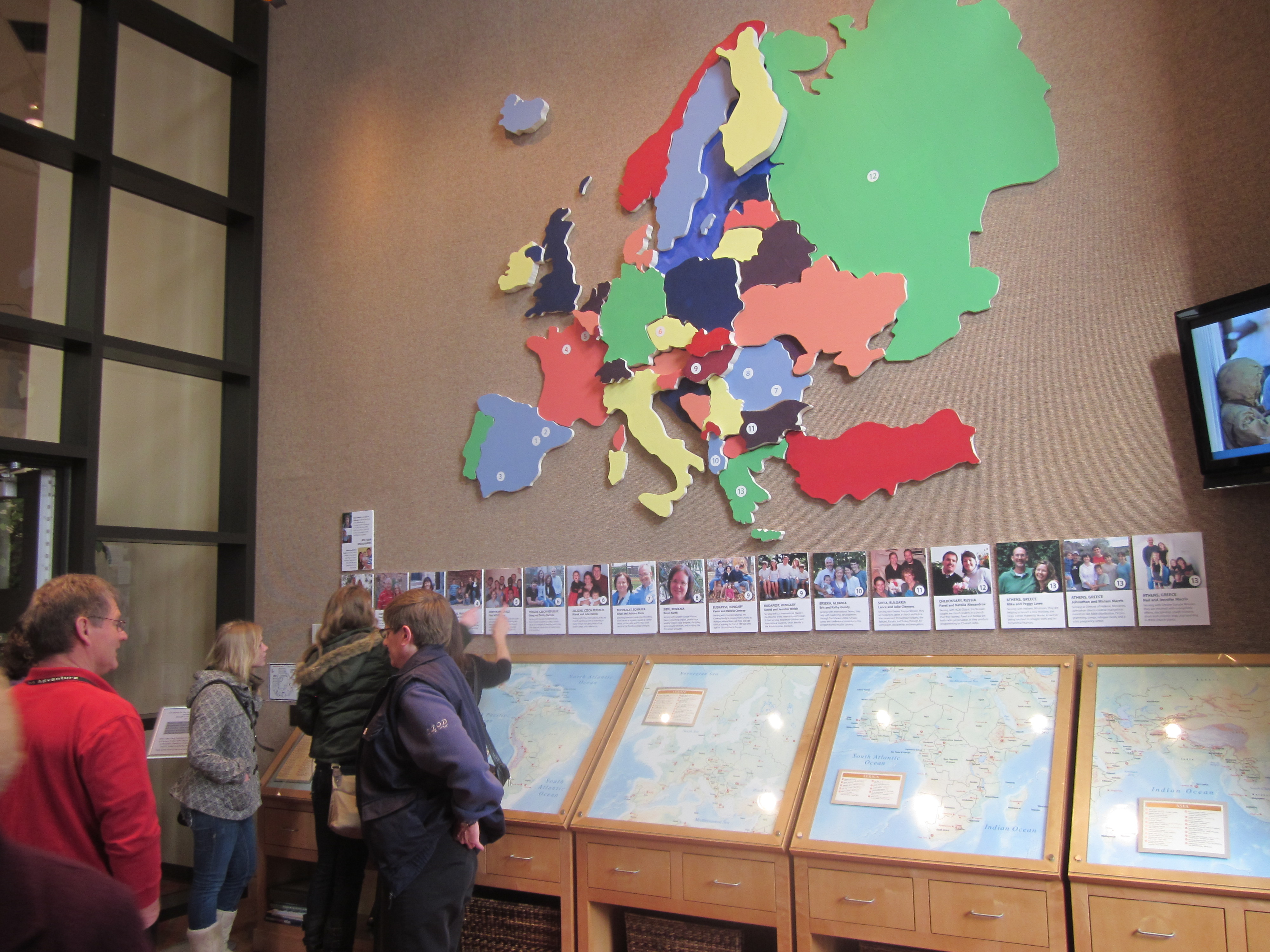
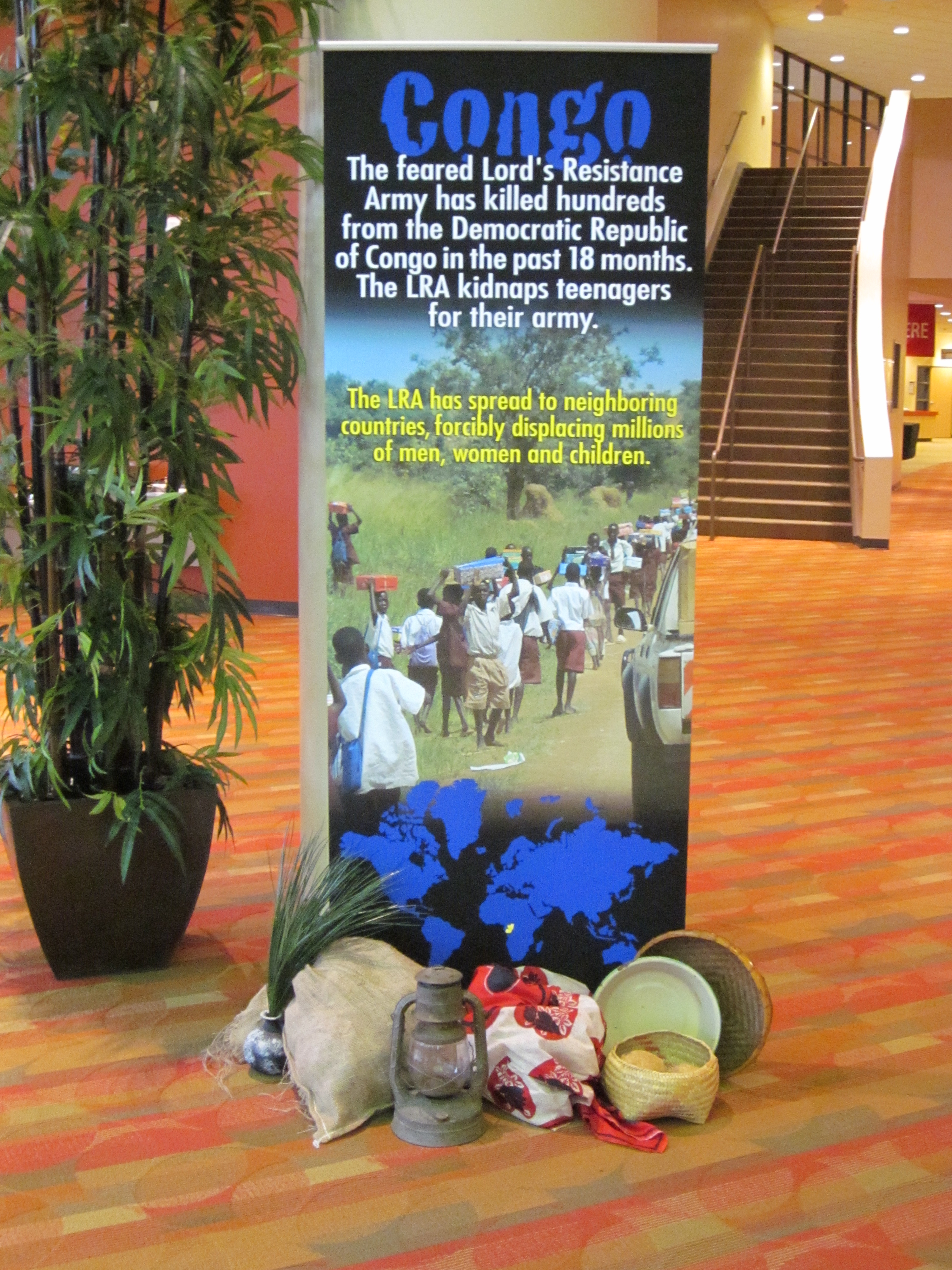
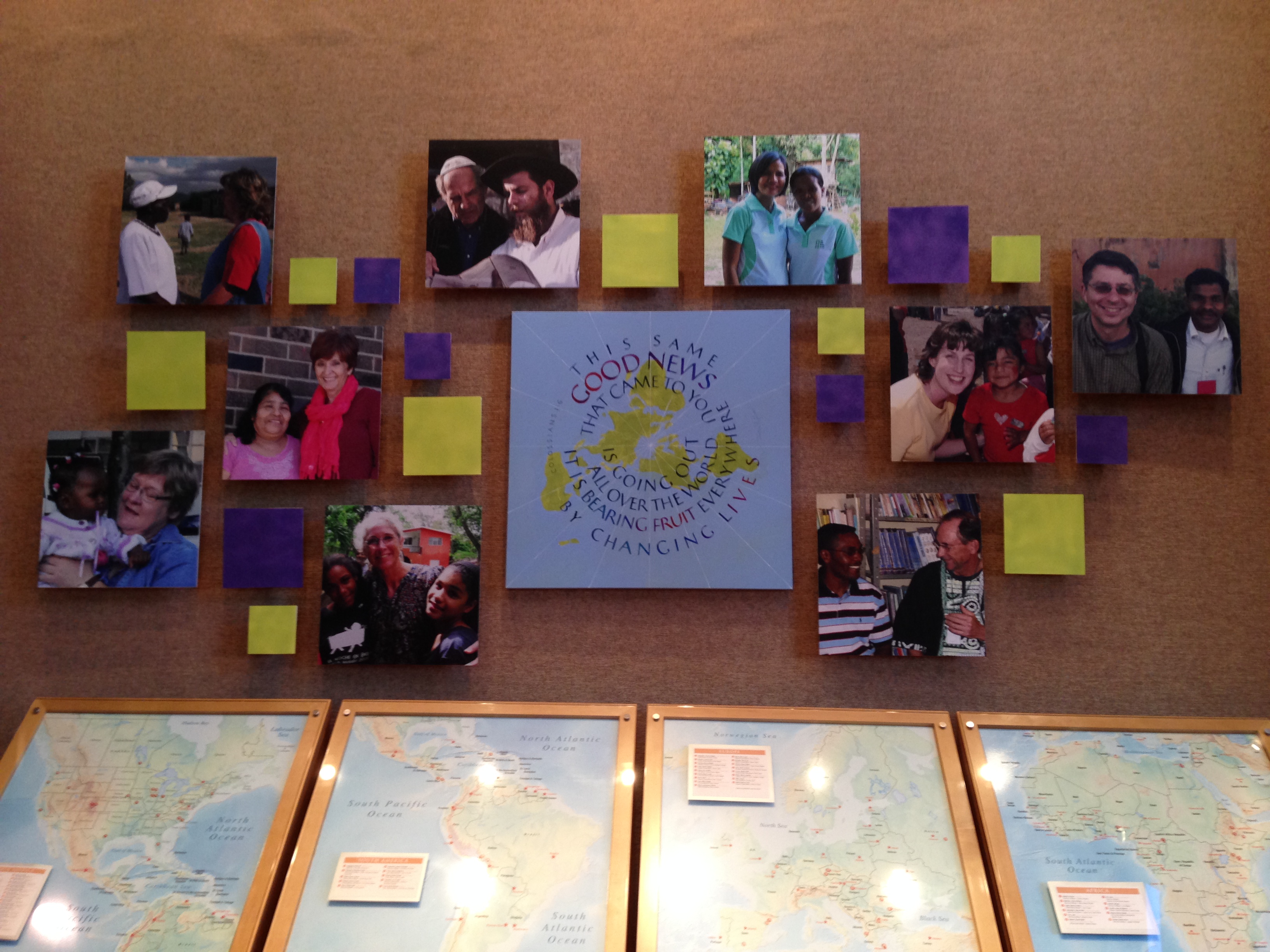
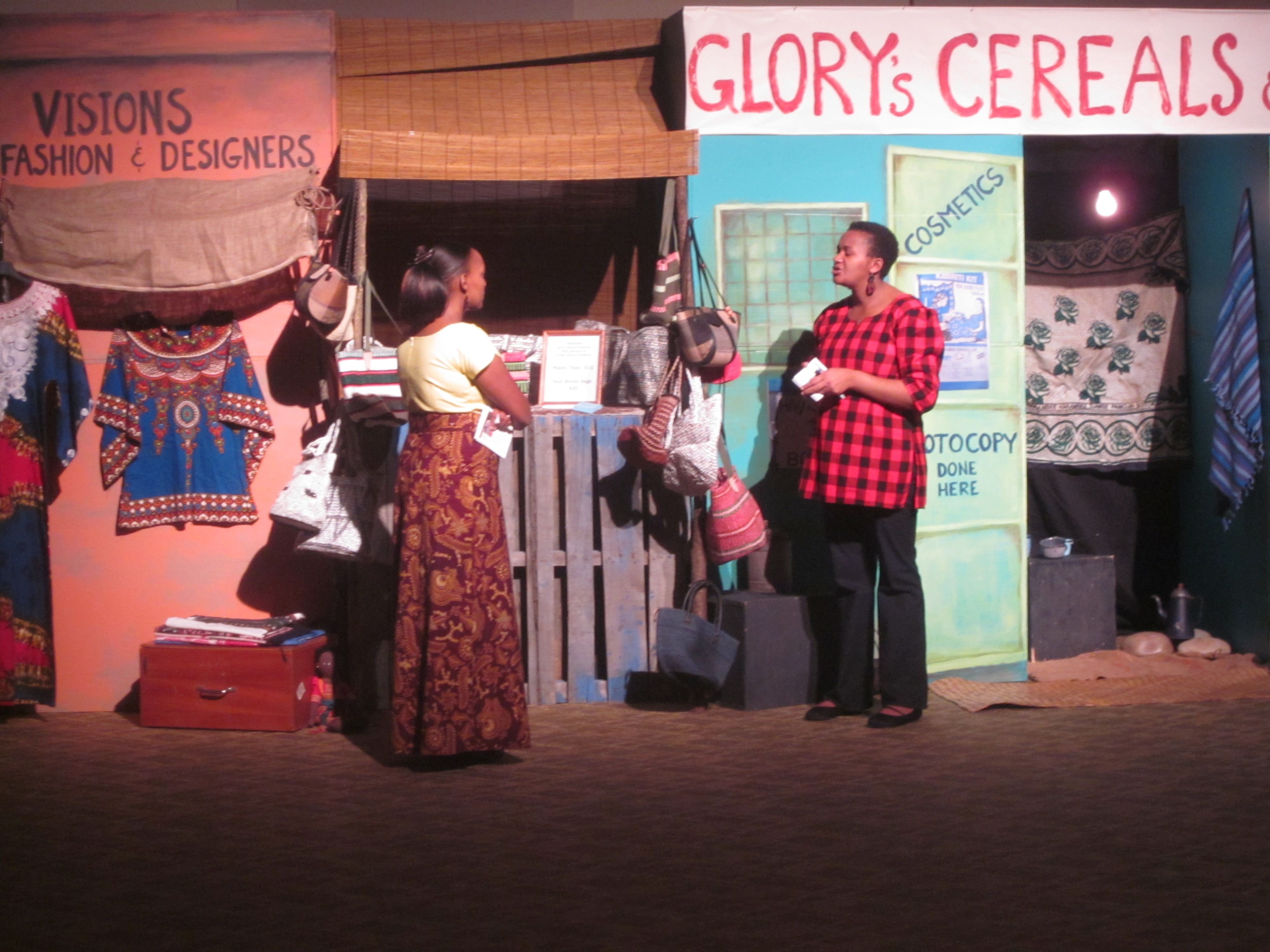
If you can make it there locally, allow enough time to explore the many exhibits and read the inspiring work that is happening in Jesus’ name around the world. It actually allows you to learn so much, I’m calling the exhibits a crash course in missions.

IMG_0991

IMG_0994

IMG_1010

IMG_1008

IMG_1001IMG_0973 IMG_0979

Enjoy this incredible 3 weekend missions extravaganza.