• About me
  • Global Outreach years
  • Hope for Life Kenya
    • Hope for Life: They’re just kids
  • Kerus Global Education

Ever Devoted

~ Growing a heart for the world

Ever Devoted

Category Archives: Uncategorized

“Africa your time has come” Sojourners

13 Saturday Apr 2019

Posted by judge525 in Uncategorized

≈ Leave a comment

Cumuhv-VIAACGmx
4-12-2019
Today’s article from Sojourners, Washington D.C. https://sojo.net/about-us/who-we-are

Our Mission 

We seek to inspire hope and build a movement to transform individuals, communities, the church, and the world.

By Adam R. Taylor    

“Africa your time has come.”

Bishop Efraim Tendero, Secretary General of the World Evangelical Alliance (WEA), delivered this prophetic proclamation during the opening celebration of the Association of Evangelicals in Africa’s (AEA) new state-of-the-art plaza located in the heart of Nairobi, Kenya. I had the honor and privilege of representing Sojourners at yesterday’s grand opening and dedication of the plaza, which will serve as an office, resource center, and hub for evangelical witness and ministry across the continent. But the event was not simply about a new building, as impressive as it may be. What made this moment so groundbreaking was the degree to which the building and how it came about represents a symbol and testament to the growing influence, sustainability, and independence of the evangelical church in Africa.

According to the Pew Center, “if demography is destiny, then Christianity’s future lies in Africa. By 2060, a plurality of Christians – more than four-in-ten – will call sub-Saharan Africa home, up from 26% in 2015.” In 1910 there were 2 million Christians in Africa. Today there are 650 million, with an estimated 200 million evangelicals. The explosive growth of the church across Africa represents a trend that far too few Christians in the West fully understand and that will likely reshape and over time transform the face of Christianity globally. Experiencing the AEA Plaza grand opening and participating in a range of side meetings and conversations over the past three days with African evangelical leaders has left me with greater hope about the future of the evangelical church and the future of Africa.

Despite my hopefulness, it’s important not to gloss over or ignore the significant challenges facing both the African church and continent. The continent has become the epicenter in the fight against extreme poverty and inequality, housing over half of the world’s people who are living in the quicksand of extreme poverty. Conflict, corruption, illicit financial flows, gender-based violence, exploitation, the impacts of climate change, among other challenges, have long stunted Africa’s growth and suffocated human flourishing. Evangelical churches across Africa continue to be heavily influenced by various forms of the prosperity gospel and the Gospel Coalition. Less than 20 percent of evangelical pastors have received seminary training, which poses both a challenge and an opportunity. According to the AEA “biblical illiteracy and heresy still remain a major challenge in the global Church.” But a revitalized and more vibrant evangelical church that is increasingly committed to both evangelism and holistic transformation will be an essential force in overcoming these and other challenges.

The explosive growth of the church across Africa represents a trend that far too few Christians in the West fully understand and that will likely reshape and over time transform the face of Christianity globally.

Founded in 1966, the AEA comprises 40 National Evangelical Fellowships as full members, serving as one of the regional associations of the global evangelical movement through the WEA. AEA and its members “join in common concern to live and proclaim the Good News of Jesus amongst all nations and peoples, seeking holiness, justice, and transformation at every level: individual, family, community, and culture.” To date, the AEA has founded the Bangui Evangelical School of Theology (BEST) in Central African Republic for the Francophone region and the Africa International University in Kenya for the Anglophone region, Christian Learning Materials Centre (CLMC) in Kenya, Africa Christian Television (ACT/PEMA) in Cote d’Ivoire, and the Accrediting Council for Theological Education in Africa (ACTEA). These projects focus on promoting sound theological and Christian education from childhood to the highest level of scholarship at university level, for effective evangelization and discipleship of the church in Africa. The two theological schools were the first graduate theological schools in sub-Saharan Africa in the modern history of the church.

At the opening, Bishop Tendero fittingly noted that because Africa has been the victim of colonialism and the exploitation of human and natural resources, it is both ironic and deeply inspiring that the center represents the first of its kind in the world, “which means that Africa is now being used by God to export the gospel and the values of the kingdom of God across the world.” Bishop Dr. Goodwill Shana, president of the AEA echoed this theme saying that this is a moment in which “the church must rise above the spiritual, political, and economic challenges facing the continent.” He talked about being “tired of seeing Africa being viewed as having a hand out begging. Instead, Africa is doing something for Africans and laying the stones for future generations.”

Just three years ago the AEA had fallen on hard times due to financial struggles and existed without a General Secretary for four years. Rev. Dr. Aiah Foday-Khabenje took over in 2009. The AEA was able to use proceeds from the sale of a piece of land to secure seed money to start the construction of a 10-story complex to house their new headquarters, which they hope will generate ongoing income. Dr. Foday-Khabenje managed to push through the project even though he faced significant resistance and criticism that this bold project was too risky and that investing in the construction of a new headquarters was too worldly.

Many African evangelical churches have traditionally been reticent to engage in advocacy and worldly engagement, in part due to their own comfort and desire to work with greater autonomy. A day before the launch of the AEA Plaza I had the opportunity to join Carol Ng’ang’a, founder of Msingi Trust, to visit a social justice center just outside the slums of Mathare. Msingi Trust mobilizes, inspires, equips, and networks Christians and community leaders toward social justice and social transformation. We met with a group of incredibly inspiring community volunteers who run the center, which has been focused on addressing a range of social justice issues confronting the community, including an alarming trend of extrajudicial killings of young people in the area. As per reports by Amnesty International and the Independent Medico-Legal Unit (IMLU), between 122 and 152 deaths of civilians were reported at the hands of police in 2016 and 2017, respectively. The center is one of 13 centers across Nairobi where volunteers, who call themselves human rights defenders, are demonstrating courageous leadership to combat police violence and address other social injustice. While there are some exceptions, by and large the defenders reported a lack of church engagement in their inspiring advocacy work and activism.

READ: In Africa, Church Leaders Responding to Climate Change Locally and Globally

I’m hopeful that the AEA will help to change this trend as they further equip and empower the church to engage in greater transformation. According to Dr. Foday-Kabenje, “if I care for the vulnerable, I must talk politics. It is not a question of whether but of how.”

One particularly encouraging example is an initiative called “The Africa that God Wants.” Building on the African Union’s Agenda 2063, the AEA hosted a continent-wide theological consultation in 2015 around that theme. The AU’s AGENDA 2063 is Africa’s blueprint and master plan for transforming Africa into the global powerhouse of the future. It is the continent’s strategic framework that aims to deliver on its goal for inclusive and sustainable development and is a concrete manifestation of the pan-African drive for unity, self-determination, freedom, progress, and collective prosperity pursued under Pan-Africanism and African Renaissance that outlines “how the continent should effectively learn from lessons of the past, build on progress already made and strategically exploit opportunities available in the short, medium and long term, so as to ensure positive socioeconomic transformation within the next four years.” The AEA sees this as an opportunity to develop a biblical vision espousing “The Africa God Wants” based on the gospel and the ability of the church to lead in transformation of policy and societal engagement, discipleship, and reaching the unreached in Africa and beyond.

Over the next year the AEA will be engaging with the church across Africa to shape a biblical vision that mirrors Agenda 2063, which will be discussed and approved at the next General Assembly in 2020 in Kigali.

These and other efforts make me increasingly hopeful that Africa has arrived, particularly as the evangelical church strengthens its commitment to advancing peace, justice, and righteousness.

Adam R. Taylor

 Rev. Adam R. Taylor is executive director of Sojourners. He previously led the Faith Initiative at the World Bank Group.

Share this:

  • Email a link to a friend (Opens in new window) Email
  • Share on Facebook (Opens in new window) Facebook
  • Print (Opens in new window) Print
  • Share on X (Opens in new window) X
Like Loading...

Urbana Faces the Challenges

05 Saturday Jan 2019

Posted by judge525 in Uncategorized

≈ Leave a comment

Like many boomers, Urbana had a huge impact on me.


Christianity Today Reports

Urbana Faces the Challenge of Calling Gen Z to Missions

Despite its lowest attendance in decades, InterVarsity’s historic conference aims to combat student cynicism through scriptural hope.
Morgan LeeMORGAN LEE

DECEMBER 31, 2018 11:23 AM

Urbana Faces the Challenge of Calling Gen Z to Missions

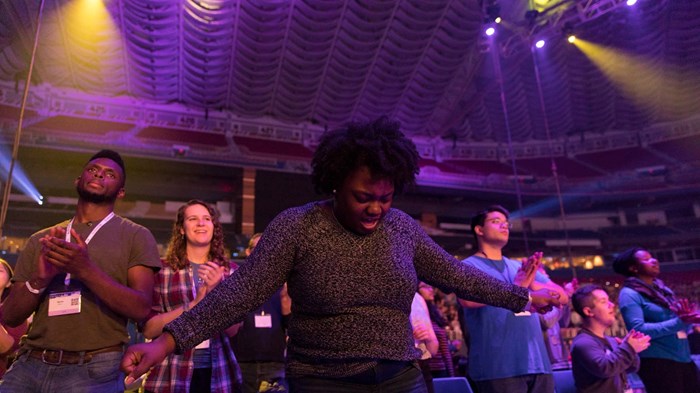
Image: 2018 Paul Lee: Urbana 18, InterVarsity’s 25th Student Missions Conference

Plenty of today’s evangelical leaders look back to Urbana conferences over the years as the catalyst that drove them to ministry.

But for the shrinking crowd at InterVarsity Christian Fellowship’s (IVCF) triennial conference—held over the past few days in St. Louis—the path to the mission field appears more complicated.

The college students who attended Urbana ‘18, though passionate about Christ, hold different expectations for life after graduation, often taking longer to settle into a vocation, and carry stress over growing student debt.

“This is changing the way that InterVarsity and mission agencies are engaging with participants,” said Greg Jao, senior assistant to IVCF president Tom Lin.

“We need a longer-term strategy to help people who may make decisions about the missions field while they’re at Urbana as college students sustain their interest and commitment over the longer period of time that it takes to figure it out.”

Determining how to navigate these challenges as Generation Z enters college is crucial for ministries like Urbana. Attendance at the historic conference is down to its lowest in at least 20 years, with around 10,000 attendees in 2018, compared to 16,000 in 2015.

But the crowd and speakers were more diverse than ever, already resembling the majority-minority demographics of the next generation: 64 percent of attendees were non-white.

“At the conferences that I’ve been to that have been less diverse, I felt I was unrepresented and it was hard for me to worship well,” Daniela Bushiri, an engineering major at New Jersey Institute of Technology, told CT. “Seeing minorities on the stage means a lot because it shows us that we have a role to play in this community.”

Today’s youngest believers are more likely to find themselves as outliers for their faith. Barna Research found that while roughly 6 in 10 of Gen Z (the 70 million people born between 1999 and 2015) identify as Christian, only 1 in 11 can be characterized as an “engaged Christian,” whose beliefs and practices are shaped by their faith.

Religious and non-religious young adults alike are struggling to find hope, so leaders at Urbana are praying this generation embrace a view of the kingdom that combats their current cynicism.

“There is a lot of anger against injustices like sexism, racism, classism, privilege, and white supremacy,” said René Breuel, a Brazilian pastor in Rome, who who taught several plenary sessions. “Young people pick that up and feel that very strongly, but don’t always have a Christian vision of how the world will be mended and restored.”

The tension between the youthful perspective of 20-somethings and the sacrificial call to missions is not unique to Generation Z. Over 20 years ago, CT reported from Urbana ‘96 that their parents’ cohort also had a “shift in commitments.”

Generation X “is often characterized as one of slackers,” Urbana’s former director Dan Harrison said, citing caution over long-term commitments due to concerns about broken marriages and job security. “They’re not slackers or uncommitted at all, but they define commitment differently than I do.”

With a new generation and new challenges before them, conference organizers turned to the timeless truths of Scripture, selecting a text with a sobering understanding of reality: Revelation. Passages from the apocalyptic book were used for daily Bible studies, taught by plenary speakers, and recited in other languages including Spanish and Hawaiian.

“Revelation takes anger by hand to a place that is healing, that exalts Christ, where the nations flourish, and where we reign in serving each other under the throne of the lamb,” said Breuel. “It can be a healing experience of that anger portrayed in a good way.”

Conference sessions named and condemned injustice from the stage, including calling out atrocities committed in the name of Christ: the Rwandan genocide, Canadian residential schools that separated First Nation children from their families, and Martin Luther’s anti-Semitism.

“I did a lot of praying and asking God what he wanted me to do with my life,” said Samuel Chow, a sophomore at University of North Carolina, Chapel Hill.

“Seeing all the bad things that the church has done and the repercussions of it has led me to be more conscientious about how I convey myself as a Christian and as a child of God to others who do not know him.”

The presentations on historic injustice resonate with young people who crave transparency.

“I’ve been talking to pastors who’ve asked ‘Why are we talking about the failures of missions in the past? Why aren’t we talking more about where to go or unreached people groups?’” said IVCF’s Jao. “What I’ve wanted to say is this generation requires a level of honesty and authenticity about our failures in the past before they’re willing to embrace the future.”

The historic missions conference has also had a long history in pursuit of racial justice, beginning with evangelist Tom Skinner’s keynote at Urbana ‘70. Urbana ‘15, also held in St. Louis, spoke directly to racial tensions in the US, with members of the worship team wearing “Black Lives Matter” shirts and speakers such as Michelle Higgins challenging the evangelical response to shootings such as Michael Brown’s in nearby Ferguson, Missouri.

Some at this year’s conference speculated whether the pushback over Black Lives Matter at the last conference or an IVCF staff policy on sexuality that went into effect in 2016 hurt attendance.

Though Urbana has drawn well-known speakers from Elisabeth Elliot to David Platt in years past, the 2018 lineup focused on personal narratives over popular names.

“Each person that gets up there, you’ll hear them say, ‘This is my blank Urbana’ or ‘This is what happened to me at Urbana ’03 or ’06,’” said Steven Grahmann, IVCF’s Arizona area director. “That’s what Gen Z and millennials want to know. This person has been here. Their experience here changed them. That could happen to me.”

Students listened for perspectives that could apply to their own walk with Christ or their future vocation.

“It’s very vulnerable of them to go in stage in front of thousands of people and share a struggle that they’ve faced and a struggle they’ve gone to in their life,” said Christine Lui, a biochemistry major at University of Texas. “That really shows their heart to share who God is and what God has done for them. It makes them seem more human.”

Others told CT about rethinking ways to incorporate missions into their career fields as a result of the Urbana sessions.

Over the next couple weeks, as thousands of students will return to classrooms and campus ministries, IVCF will be left to evaluate Urbana 2018, which concludes today.

With an attendance decline of nearly a third, the organization will examine what kept students away from the event—whether shifting priorities, scheduling conflicts, or other factors. (In just a few days, the Cross Conference will take place in Louisville, Kentucky, drawing a more Reformed and Southern Baptist crowd, and featuring former Urbana speaker David Platt.)

Just about 60 percent of the 10,000 who showed up for Urbana 2018 were students.

“What we need to do after Urbana is ask the question, ‘How has the ecosystem of Christian conferences changed? Is this a shorter-term trend or a longer-term trend?,’” said Jao.

“What we do know, especially because of Revelations, is that God is sovereign. He brought these 10,000 and so that’s our focus during this week.”

CT has previously reported on contemporary challenges to student ministry, including InterVarsity’s legal fights over faith requirements, Princeton Christian Fellowship’s decision to drop “evangelical” from its name, and Fuller Youth Institute’s research on churches with growing young adult demographics.

Share this:

  • Email a link to a friend (Opens in new window) Email
  • Share on Facebook (Opens in new window) Facebook
  • Print (Opens in new window) Print
  • Share on X (Opens in new window) X
Like Loading...

Welcoming the Stranger?

16 Friday Nov 2018

Posted by judge525 in Uncategorized

≈ Leave a comment

Like most of us, the Central Americans’ caravan through Mexico is mind-boggling. The desperate families, rivers being crossed, the lack of food, the misery…all spell desperation and hope for something better. And then there’s the living quarters that await them, the long lines, and the “time-line” of years that await them all together overwhelm our sensibilities.

My small group (and some hubbies) attended a World Relief forum on this subject last week. We were asked to give, volunteer, or be an advocate to the cause of caring for the stranger. As Christians it’s about understanding, growing our heart of compassion, and living up to the themes of our Christian faith….in every book of the Bible, (practically every chapter) there is some encouragement to reach out to those who are poor, disenfranchised, lost, or wandering. As a follower of Christ, I ask myself, ‘am I accepting the challenge that the Bible gives me to really care for the “stranger”?

World Relief staff member and author of Welcoming the Stranger, Matt Soerens, gives a current look at the issue in his book. World Relief stands behind this conviction:

IMG_4931 (2)

Here is the follow-up email to those who attended the forum, full of links to what you, like I, may be curious about. A lawyer present at this forum reminded us that the law is the law….there won’t be any drastic changes in the processes at the border:

Last week World Relief sponsored an educational evening, “Spotlight on Asylum Seekers at the Border” at St. Thomas the Apostle Catholic Church in Naperville. Thank you to everyone who attended to hear stories about asylum seekers at our southern border. We wanted to share some additional resources with you so that you can continue learning about asylum seekers and praying for them.

If you were unable to attend the Spotlight last week, we hope these resources will help fill you in as well.

Factsheet on Asylum Seekers: We shared this factsheet with those who attended the Spotlight. Here is a digital version you can share with friends and family.

Asylum in the United States: This is a very thorough explanation of the asylum process and key statistics from the American Immigration Council.

The Parable of the Caravan: This article by Kent Annan asks us to think about the migrant caravan in a way that allows it to “reveal areas of ours lives where we need discipleship in the way of Christ.”

Today’s Migrant Flow is Different: This story from The Atlantic explains the difficult situations that are causing Central Americans to flee their countries.

Advocate for Asylum Seekers: Consider contacting your Members of Congress, whether over the phone, by email, or on social media, to tell them that you want the U.S. to uphold its asylum laws and continue welcoming families who are fleeing persecution.

We hope these resources are helpful to you. If you have any questions or are looking for other specific resources, you can reply to this email to let us know.

One further addition here:

Many of us don’t have reason to pay attention to the Lausanne Movement. Lausanne, in my eyes, is a watchdog group that teaches and keeps our evangelical world committed to the Biblical orthodoxy of the Evangelical Movement in the world. I attended the Cape Town World Congress on Evangelism in 2010 when the 6,000 chosen delegates from around the world were introduced to The Cape Town Commitment which was agreed upon by hundreds of evangelical organizations and institutions of higher learning.

I was sent an email today that reminded me of the section of the Cape Town Commitment that is titled, 

7. We love God’s world.

B) We love the world of nations and cultures. ‘From one man, God made all nations of humanity, to live on the whole face of the earth.’ Ethnic diversity is the gift of God in creation and will be preserved in the new creation, when it will be liberated from our fallen divisions and rivalry. Our love for all peoples reflects God’s promise to bless all nations on earth and God’s mission to create for himself a people drawn from every tribe, language, nation and people. We must love all that God has chosen to bless, which includes all cultures. Historically, Christian mission, though flawed by destructive failures, has been instrumental in protecting and preserving indigenous cultures and their languages. Godly love, however, also includes critical discernment, for all cultures show not only positive evidence of the image of God in human lives, but also the negative fingerprints of Satan and sin. We long to see the gospel embodied and embedded in all cultures, redeeming them from within so that they may display the glory of God and the radiant fullness of Christ. We look forward to the wealth, glory and splendour of all cultures being brought into the city of God – redeemed and purged of all sin, enriching the new creation.[25]

Such love for all peoples demands that we reject the evils of racism and ethnocentrism, and treat every ethnic and cultural group with dignity and respect, on the grounds of their value to God in creation and redemption.[26]

Such love also demands that we seek to make the gospel known among every people and culture everywhere. No nation, Jew or Gentile, is exempt from the scope of the great commission. Evangelism is the outflow of hearts that are filled with the love of God for those who do not yet know him. We confess with shame that there are still very many peoples in the world who have never yet heard the message of God’s love in Jesus Christ. We renew the commitment that has inspired The Lausanne Movement from its beginning, to use every means possible to reach all peoples with the gospel.

C) We love the world’s poor and suffering. The Bible tells us that the Lord is loving toward all he has made, upholds the cause of the oppressed, loves the foreigner, feeds the hungry, sustains the fatherless and widow.[27] The Bible also shows that God wills to do these things through human beings committed to such action. God holds responsible especially those who are appointed to political or judicial leadership in society,[28] but all God’s people are commanded – by the law and prophets, Psalms and Wisdom, Jesus and Paul, James and John – to reflect the love and justice of God in practical love and justice for the needy.[29]

Such love for the poor demands that we not only love mercy and deeds of compassion, but also that we do justice through exposing and opposing all that oppresses and exploits the poor. ‘We must not be afraid to denounce evil and injustice wherever they exist.’[30] We confess with shame that on this matter we fail to share God’s passion, fail to embody God’s love, fail to reflect God’s character and fail to do God’s will. We give ourselves afresh to the promotion of justice, including solidarity and advocacy on behalf of the marginalized and oppressed. We recognize such struggle against evil as a dimension of spiritual warfare that can only be waged through the victory of the cross and resurrection, in the power of the Holy Spirit, and with constant prayer.

D) We love our neighbours as ourselves. Jesus called his disciples to obey this commandment as the second greatest in the law, but then he radically deepened the demand (from the same chapter), ‘love the foreigner as yourself’ into ‘love your enemies’. [31]

Such love for our neighbours demands that we respond to all people out of the heart of the gospel, in obedience to Christ’s command and following Christ’s example. This love for our neighbours embraces people of other faiths, and extends to those who hate us, slander and persecute us, and even kill us. Jesus taught us to respond to lies with truth, to those doing evil with acts of kindness, mercy and forgiveness, to violence and murder against his disciples with self-sacrifice, in order to draw people to him and to break the chain of evil. We emphatically reject the way of violence in the spread of the gospel, and renounce the temptation to retaliate with revenge against those who do us wrong. Such disobedience is incompatible with the example and teaching of Christ and the New Testament.[32] At the same time, our loving duty towards our suffering neighbours requires us to seek justice on their behalf through proper appeal to legal and state authorities who function as God’s servants in punishing wrongdoers.[33]

Share this:

  • Email a link to a friend (Opens in new window) Email
  • Share on Facebook (Opens in new window) Facebook
  • Print (Opens in new window) Print
  • Share on X (Opens in new window) X
Like Loading...

Gallery

Thoughts on Friendship

11 Thursday Oct 2018

Posted by judge525 in Personal Stories, Uncategorized

≈ Leave a comment

This gallery contains 6 photos.

While we are in Brentwood, TN for a couple months (settling into the apartment attached to our kid’s home), I …

Continue reading →

Image

Let us believe in healing at Willow Creek

15 Wednesday Aug 2018

The Healing of Willow Creek

Misguided loyalty harmed this historic congregation. True loyalty can redeem it.
MARK GALLI| AUGUST 13, 2018
The Healing of Willow Creek

Image: JLM

In light of the resignation of its pastoral staff and elder board, it’s time to rally around Willow Creek Community Church with support and prayers. With those resignations, and the repentance they suggest, Willow has an opportunity to enter into a new fruitful season of ministry.

Christianity Today
Current Issue

JULY/AUGUST 2018

Let’s ponder what has happened in the last few months and why, because a simplistic reading of the events will only tempt Willow—and any Christian institution in a similar crisis—to react in such a way that the fruitful season will wither away all too quickly. Many women have come forward and said Bill Hybels has abused his power and sexually harassed female colleagues. The current leadership, pastors and elder board, have failed early to take seriously the accusations being brought forth. We are wise to try our best to grasp the moral and psychological complexities of what has taken place, so deep redemption can take place.

Rediscovering True Loyalty

Given the number of troubling testimonies about Hybels’s behavior, it’s easy to forget we’re still dealing with allegations and not proven fact. Many are of the opinion—me included—that he is guilty. Hybels, however, continues to deny many of the most serious allegations. It’s not merely an American thing but is also required of Christian charity: The accused are entitled to their day in court. For independent churches in Willow’s situation, that court is the sort of independent investigation that Willow has at long last commissioned. An independent investigation will hopefully be able to bring to light the full truth of the matter. The choice of the organization to investigate, as well as its work, are certainly matters to keep in prayer.

The current pastoral leaders and the board have shown both courage and humility in resigning. That in itself is an act of repentance, and for that we can be grateful. Without excusing the leadership, we do well, however, to note why staff and boards who otherwise show signs of wisdom are tempted in a crisis to downplay accusations and protect their leader at all costs, for they do it often.

One reason for many is loyalty. Loyalty is an especially precious virtue in mission-driven organizations, especially in an age when missions are so easily undermined. We do not want to hire staff or form boards whose first instinct is to suspect the leader of the worst after every accusation.

And here is the rub, because loyalty is more complex than we first imagine. We tend to think that loyalty means always taking the side of the leader to whom we want to be faithful. Loyalty instead means doing everything in your power to make the leader not only a better one but a more faithful disciple of Jesus Christ. It’s not unlike patriotism for one’s country. The true patriot loves his country; so much so that he will speak out when he believes the country is doing wrong, to call the nation to adhere to its deepest ideals.

In the face of substantive accusations, then, it is not a betrayal to look seriously at accusations in a way that the truth will come forth and not be covered up. It is an act of loyalty—for the sake of the leader’s integrity.

Loyalty to the leader continues and drives even deeper when it appears that the leader is guilty of a shameful offense. That’s when the leader needs the loyalty of a true friend. This doesn’t mean denying or excusing wrong behavior. At such times, it means standing with them, praying for and with them as they begin to wrestle with wrongdoing and hesitantly, awkwardly try to repent. Because it is inevitable that in such crises, leaders usually do not have the spiritual wherewithal to confront every aspect of their sins immediately. Repentance is a hard and fearsome thing. We need God’s powerful grace to repent, and that grace is often communicated by patient and loving counselors who can help lead us to a proper and deep repentance.

But loyalty is more complex still. Pastoral staff and boards are also called to be loyal to their congregations. This is one reason leadership at every level is so hard and why it tests the best of men and women. Staff and boards often feel they have to choose between loyalty to their leader or to their congregations they are called to serve, and they often end up choosing one or the other. This is what has happened at Willow, and not only with the board. People are either for the congregation, and especially the women who have come forward, or they have been for the staff, board, and Hybels. But loyalty and love require that we parse how and in what ways we need to be loyal to all parties, even when we believe one party has made grievous errors of judgment or has been immoral.

Of course, all these loyalties are grounded in our loyalty—that is, faithfulness—to Jesus Christ, who has demonstrated his loyalty to us, even while we were sinners.

Going Forward

Some have said that Willow staff and elders have been too loyal to Hybels, and some argue that boards should not be so loyal. As the argument above suggests, we beg to differ. Instead, we believe boards should be even more deeply loyal to their congregations and to their pastors—with all that loyalty requires.

One question now is who is going to be loyal to those who have just resigned? And to Bill Hybels and his family? And what does loyalty look like now for those who remain and those who will be called into leadership? Who will be approaching any who have erred and sinned and have wreaked havoc? Is there anyone offering them prayer and support, inviting them out for coffee and conversation, being willing to listen to their story—all the while prodding them to deeper repentance and righteousness?

Many are saddened and rightly angry at the way the initial accusers of Hybels have been either ignored or slandered. That is a terrible thing. But it would only make matters worse if those we believe who have acted disgracefully are shunned in turn.

More than anyone, of course, the accusers of Hybels—those women who have apparently been bullied or sexually harassed—need people to rally around them. This nearly goes without saying. But the gospel calls some of us to rally around the accused and guilty, as well. What loyalty and love looks like in each situation is different, but in the end it should be a combination of honesty and grace, tough love and tender mercy, that leads one and all into a deeper relationship with God.

In short, our love and loyalty must span the breadth of innocence and wrongdoing, of wisdom and malfeasance, if we are to discover a redemption that truly heals.

In this painful moment, Willow has been given a divine opportunity—that is, a chance to be born again. It is entering into a season of self-reflection and repentance, which begins with that independent investigation. If it allows it to be a season, not something to be rushed though, it will see the slow and steady growth of grace set deep roots. May our prayer simply be the promise of the Lord in Amos (9:14–15), when he announced he would bring his people back from exile:

They will rebuild the ruined cities and live in them.
They will plant vineyards and drink their wine;
they will make gardens and eat their fruit.

I will plant Israel in their own land,
never again to be uprooted
from the land I have given them.

Mark Galli is editor in chief of Christianity Today.

Share this:

  • Email a link to a friend (Opens in new window) Email
  • Share on Facebook (Opens in new window) Facebook
  • Print (Opens in new window) Print
  • Share on X (Opens in new window) X
Like Loading...

Posted by judge525 | Filed under Uncategorized

≈ Leave a comment

Church Leaders Fail and Fall

08 Sunday Jul 2018

Posted by judge525 in Uncategorized

≈ Leave a comment

pexels-photo-691668

I’m so glad it’s summer and we are happily engaged in vacations and family fun. This spring was a difficult one. Besides the political leadership upheaval that America finds herself in, I feel as though the U.S. evangelical world has considerably lost its way in many arenas.

One of the most devastating for me personally has been what has happened at Willow Creek, my former church. It was revealed in March that the pastor had been engaged in relationships that dramatically demonstrated abuses of power over many years.

My connection? For all of the 1990’s I was was in ministry roles at Willow as a high capacity volunteer. As a volunteer I had a desk, a team of volunteers, and we trained 25 short term global teams each year who served as servants around the world. I also was on the Board of International Ministries for 10 years. I rubbed shoulders with many in leadership and greatly respected the kingdom work happening through that place.

When the Chicago Tribune and Christianity Today revealed in March that one more celebrity pastor had abused his power, I was sickened. I had to stand aside from public media and sit this one out as one of the accused was once my pastor, Bill Hybels. It was all too close to home. Getting perspective on his failing has been devastating.

In the months that have followed the revelations worsened. Reading this article by Andy Crouch in the Gospel Coalition helped me get perspective. Crouch addresses the problem of power abuse with great care. It is a wonderfully vulnerable and Godly piece filled with wisdom for us. Crouch includes steps to take to prevent these abuses of power for any Christian leader.

In my opinion, there is a huge absence of wisdom and practical, disciplinary practices for leadership boards to implement in church governance. Why is this true at the church that invented the Global Leadership Summit that ministers to thousands of church leaders each year? I have no idea. I feel that the absence of this wisdom will be corrected in the not to distant future. Let us encourage good dialogue around this subject in our own churches and organizations. I am waiting for a book to be written on the role of Elder Boards in evangelical churches.

It’s Time to Reckon with Celebrity Power

MARCH 24, 2018  | Andy Crouch 

 CURRENT EVENTS

It was not a great week. In three separate cases in my immediate circles, a person with significant power at the top of an organization, each one a subject of flattering major media exposure during their career, was confronted with allegations of sexual misconduct and related misdeeds. In one case, the person resigned from his role and board memberships, accompanied by a direct and remorseful confession. In the second, the person resigned, but not without posting a defiant denial of all allegations against her. In the third, the person likewise denied all allegations in the strongest terms—at one point with physical force, banging on a table—and, as I write, remains in his position.

All three were, or at least had once been, seen as among the most exemplary Christian leaders of their generation, including by many who worked closely with them. While I wasn’t personally close to any of the three, I have experienced and benefited from their exceptional gifts in leadership and ministry, as have thousands or millions of others.

I am not naming them here. If you are in their sphere of influence, you’ve already had the wind knocked out of you by the week’s revelations, and there is no need to redouble the trauma. If you are not, then the desire to know their names, though understandable and human, is a prurience I will not indulge. And while I pray that such a tragic trifecta will not happen often in a single week, the truth is that I could have written this essay many times in the past few decades, and will have occasion to do so many times in the future. The names are actually not that important for my purposes—it is the system in which not just they, but we, are so deeply complicit.

Our Complicity in Celebrity Power

Two systems, actually. First is the one, almost as old as humanity itself, that gives the powerful the opportunity to exploit, plunder, murder, and—last, worst, and perhaps most common of all—rape. By direct command or by mere implication (“Will no one rid me of this meddlesome priest?”), those in positions of power have long been able to actualize their fantasies and grievances—no different in kind from what the rest of us indulge in without having the means to realize them.

Among the many dark gifts of power is distance—distance from accountability, distance from consequences, distance from the pain we cause others, distance from self-knowledge, distance from friendship, distance from the truth. The palace rooftop, the back entrance, the executive bathroom, the private jet, not to mention what Andrew Jackson’s critics called the kitchen cabinet and what C. S. Lewis called the Inner Ring—the accommodations that hide us from others’ sight, the adherents who are actually dependents if not sycophants, the accoutrements of plausible deniability.

In that privacy and at that distance, we become capable of acts we would never have imagined. (If all of this week’s allegations are true—which I cannot possibly know, and absolutely do not presume, to be the case—and these leaders’ denials are lies, part of the vehemence of the lies is their inability to truly comprehend that they have so completely failed to live up to their own ideals.) This has been true ever since human society became complex enough to grant some people the power to distance themselves in this way—and in a way, it was true even when human society was just two brothers in a field, just out of sight of the only kin they had in the world.

That part of the problem—the distance of power and its distorting effects on the powerful—is ancient and will never go away. But it is compounded by something genuinely new: the phenomenon of celebrity. Celebrity combines the old distance of power with what seems like its exact opposite—extraordinary intimacy, or at least a bewitching simulation of intimacy.

It is the power of the one-shot (the face filling the frame), the close mic (the voice dropped to a lover’s whisper), the memoir (the disclosures that had never been discussed with the author’s pastor, parents, or sometimes even lover or spouse, before they were published), the tweet, the selfie, the insta, the snap. All of it gives us the ability to seem to know someone—without in fact knowing much about them at all, since in the end we know only what they, and the systems of power that grow up around them, choose for us to know.

Celebrity combines the old distance of power with what seems like its exact opposite—extraordinary intimacy, or at least a bewitching simulation of intimacy.

For systems of power do indeed grow up around the modern phenomenon of celebrity, because in its way it is so much more powerful than the older regime of position, status, and coercion. The distance of that ancient regime gave those at its pinnacle a kind of power, without a doubt, but a kind of vulnerability as well, because the distance worked both ways. Out of the king’s earshot, the courtiers could mutter and the bodyguards could plot. In the lord’s field, the peasants could complain. The workers could make jokes about the Man, and kids on the corners could scatter long before the fuzz arrived. The new regime of intimacy is ever so much more powerful because it is based fundamentally not on fear and coercion and distance—at least at first—but on desire and imagination and indeed on eros, the desire for union.

Celebrities embody who we aspire to become and invite us—so it seems—into the inner circle of their lives. We are their kitchen cabinet, we are so close to being in their Inner Ring. They are so disarmingly transparent with us. They tell us so much of the truth. They live in our own imaginations, their faces more familiar to us than our neighbors’ or even some of those we call, loosely, in the American way, our friends. They inspire us, ordinary in their extraordinariness, assuring us that they are people like us and thus that we can be people like them. Above all, they beckon us to come closer.

Vanishing Institutional World

Over centuries, millennia really, philosophers and political theorists wrestled with how to tame the arbitrariness of distant power. At a glacial pace—taking different courses if you compare China after Confucius with the West after Plato and Cicero—societies gradually hedged in those at the pinnacle of power with what we conventionally call institutions, systems bigger than the powerful themselves that held the powerful in certain ways to account. None was anywhere near perfect, and the institutions themselves could be bent to terrible ends.

But nonetheless, over a long period of time and with countless fits and starts, we learned something about how to tame the worst of power. Coercion had to be justified and violence could be redressed; we came to believe in, and to some non-trivial extent came to be, nations of laws, not men. In the United States, where this experiment was in many ways carried to its furthest extent, the powers were separated across the land—not just in the three branches of government, but in organizations of many kinds, in the solemnly elected officers of countless clubs and fraternal societies, in presbyteries and elder boards, in the legal requirement for independent directors in publicly traded companies.

Our grandparents and great-grandparents built extraordinary institutions, of many kinds, along these lines, including the churches whose stately buildings still line many a town square and urban downtown street. Those institutions were nowhere near perfect and perpetuated all kinds of injustice. But at their best they preserved and gave expression to a profound and radical idea: that the best things human beings do together are bigger and more lasting than any person who may occupy a temporary position of power.

It is not wrong to be offended at the homogeneity of the faces of past presidents who stare down from portrait after portrait in institutional hallways (white males in some, black males in others, since African Americans so assiduously and proudly developed their own institutions in the years after Emancipation). But it is not wrong, either, to marvel at how anonymous they are to us, and to a great extent were to their own contemporaries; how much they saw themselves as stewards rather than sole proprietors; how much continuity they preserved even as they led necessary change; how peacefully and graciously they handed on leadership from one to the next.

Their world was an institutional world. It is now almost entirely gone.

It is gone because celebrity power has swept the stolid institutional buildings and stolid institution-building people of our grandparents’ generation before it like so much chaff before a tornado. In the Oval Office of our country sits a man with the apparent emotional age, based on his public persona, of an 8-year-old, albeit with the libido of a 15-year-old. He cannot keep faith with anyone, in all probability because he does not actually fully grasp the existence of anyone besides himself. And he is simply brilliant at manipulating the power of celebrity.

Celebrity power has swept the stolid institutional buildings and stolid institution-building people of our grandparents’ generation before it like so much chaff before a tornado.

He has colonized all of our imaginations—above all, one suspects, the imaginations of those who most hate him, who cannot go an hour in a day without thinking about him. He has always aspired to be, and now is, the ultimate celebrity—someone we know all too well but do not know at all because there is actually no one there to be truly known. He has never truly sought anything beyond the validation of fame and the uniquely modern power it brings, but having sought that one thing, in some demonic inversion of the gospel promise, all these other things have been added unto to him as well—including the fatal distance that still may allow him to do anything he pleases, up to and including total war.

At least that puts this week in perspective.

Road Less Traveled By

It could have been otherwise for the church. There was one and only one celebrity in Jesus’s world, one face on every coin, one name on everyone’s lips. And when Jesus was shown that face and that coin, he dismissively suggested the coin be returned to the one who had been so eager to imprint his image on every corner of the empire. Render back to Caesar the coin of his realm, Jesus said—and render to God whatever, or whoever, bears his image (Mark 12:17). The visible image of the invisible God left no portrait. The one time he wrote, he wrote in the dust (John 8:6). He had a different way of using power in the world, a way that turned out to outlast all the emperors, including the Christian ones.

He offered no false intimacy—his biographer John said that he entrusted himself to no one, because he knew what was in every person’s heart (John 2:24–25)—but he kept no distance, either. He let the children come to him (Matt. 19:14). He let Mary sit at his feet and let another Mary wash his feet with her tears (Luke 7:36–50; 10:39). Hanging naked on a cross, he forgave, blessed, and made sure that yet another Mary would still have a son (Luke 23:34, 43; John 19:26). His power, truly, was not of this world.

As the power of celebrity overtook the power of institutions in the second half of the 20th century, we could have made a different choice in our churches. Indeed, some churches and some leaders did. The Anglican priest John Stott was an incomparably powerful figure, in the best sense, in 20th-century evangelicalism. He lived with a divine indifference to power. He spent long, unsung stretches of his life and ministry in what was called in the Cold War years the “Third World,” long before Instagram mission-trip reports. He was reserved, as almost all British men of his generation and class learned to be. He never married. Yet his life was utterly open to friends all over the world, to the assistants (always male) he invited into the most intimate place an Anglican rector possesses—his study—and to his personal secretary of 55 years, Frances Whitehead. The fruit of his life is incalculable.

As a young man I was impatient with some of Stott’s theology. I found it insufficiently creative, insufficiently imaginative in response to the creative image implanted in human beings and in God’s living Word. And in some ways I still do. But as I get older I am in increasing awe of the leaders he fostered, the institutions he built and served, and the legacy he left—even though, since he had the misfortune to live before social media, probably only one in a hundred people who call themselves “evangelicals” knows his name.

Likewise Billy Graham. I have never kept the “Billy Graham rule” that says a man must never be alone with a woman not his wife—it strikes me as unhelpful in countless ways, above all in the ways it can rob women of the chance to influence men and to be mentored and raised up in the formal and informal power they ought to possess by the gift of God’s Spirit. But most people have forgotten the context of that rule, which was a broader set of commitments, hammered out in a hotel room in Modesto, California, in holy fear that the abuses of power that had characterized several generations of “evangelists” would ensnare the young evangelist and his team. They made four commitments, not just that one—equally important were their commitments to financial transparency and simplicity, to utter honesty in their reports of numbers and conversions, and, perhaps most notably for our purposes, to always partnering with the local church.

Graham made grievous mistakes, as he admitted freely later in his life, above all when his celebrity intersected with the toxic distance, privacy, and paranoia of Richard Nixon. He was probably more of a celebrity than was healthy for him, his family, and the revival he sought to lead. But the way he tempered his celebrity with simplicity, accountability, and voluntary limits on his power is the road less traveled by, and in the eternal accounting of his life it may well turn out to be what made all the difference.

Stott and Graham are gone. The institutions they worked hard to build are fragile, though by no means doomed. There are still countless pastors, evangelists, and other leaders in American Christianity who live modest lives, submit themselves to others out of reverence for Christ, and are building something bigger than themselves. But the revelations of this week remind us that we are in a perilous position. Not because the allegations are necessarily true, but because many of our seemingly strongest institutions actually are weak in the most important way: they are not strong enough to be able to convince us that the allegations against their leaders are not true.

The transmutation of the power of intimacy into the distance of power is an inescapable feature of all too many of our churches and ministries.

The most damning facts in the disheartening emails and news reports that came across my desk this week are not about the alleged actions of certain leaders—which from my limited point of view cannot be treated as facts at all—but the uncertain and partial reactions of the systems around those leaders.

When boards are beholden to founders; when elders allow it to be publicly said that “no one person can replace” a senior pastor; when information systems can yield the number of emails exchanged between a senior leader and a given person but somehow the content is not recoverable—none of this means that any malfeasance has been committed. But it does mean that the sheer gravitational pull of those charismatic figures has nullified the institution’s ability to protect itself, and indeed its leader, from both legitimate and falsified allegations of misconduct.

And whatever the facts of any given case, anyone who has been backstage at Christian events knows just how distant, how untouchable, how buffered are certain celebrities who on stage seem so transparent, so natural, so unguarded. Even if not one of the allegations I read about this week can ultimately be proven, the transmutation of the power of intimacy into the distance of power is an inescapable feature of all too many of our churches and ministries.

Change Starts with Us—It Starts with Me

We need profound change, and it starts less with our public figures than with ourselves. We will, paradoxically, need to expect less transparency from our public figures, less alluring displays of intimacy and “vulnerability,” and more accountability from the systems around them. We will need to put more energy into building systems, including systems that account for the temptations of power, that will last for generations. We will need to somehow quell our lust to feel close to people who can charm the camera and hold the spotlight—recognizing that the half-life of such leadership has always been measured in years, not generations, and now is numbered in something more like months or days. We will need to commit ourselves to the institutions that have maintained their integrity, sometimes through painful episodes of public accountability. I serve on the board of trustees of two such organizations, and there are many, many more.

Meanwhile, those of us who find ourselves with a measure of public fame must make radical commitments to limit our power. I have tried to do this myself as I realized my public profile and influence was growing. Some of my commitments ought to remain confidential—so that my right hand doesn’t know what my left hand is doing, let alone my right hand Instagram what my left hand is doing—but I can name at least some of them.

I have served alongside, learned from, mentored, and promoted women, and the women of all generations who are my partners in the ministry of the gospel are among the great gifts of my life. I often have good reason to meet with them one on one (though I have also found that almost all work, ministry, and even counseling is more fruitful in groups of three or four than in dyads). For two decades now it has been my intentional practice that we meet in public places, and on the rare occasion when we meet over dinner it is early in the evening and in the front of the restaurant, not in the back. My wife, Catherine, knows of every such meeting ahead of time and hears about the conversation afterward. Catherine has all my passwords. I ensure that every woman who entrusts something deeply confidential to me understands that she is entrusting it to Catherine as well.

We need profound change, and it starts less with our public figures than with ourselves.

I have joined an organization I did not found, led by a CEO to whom I report, who in turn reports to a serious, empowered, independent board of directors, and I spent 12 years before that working for another organization. I have submitted all my travel and speaking decisions to my CEO as well as to Catherine, and was finally able, gladly, to shift from a freelance speaking career, with income flowing to my sole proprietorship, to one where all fees flow to the organization. I publish my speaking fees and terms online. I minimize my use of agents who would have a financial incentive to increase my celebrity and would interpose themselves between me and the churches and ministries that wish to engage me as a speaker. (I do have a literary agent, but she is eminently and unshakably sane.) At conferences that offer speakers a “green room,” I use it only for prayer and preparation immediately before I speak. The rest of the time, I sit in the audience like everyone else. At events that use name tags, I wear one.

Every Sunday I rest. Every summer I turn off my email, entirely, for two weeks. (My vacation message begins, “Unfortunately, I will never read your email.”) Every seven years I aim to leave my daily work and all the significance it gives me. Twice those sabbaticals have come because what I was trying to do had failed. They have been the most creatively fruitful periods of my life.

Every January I meet with seven other men who have similar positions of public leadership. We call ourselves “The Eulogists.” We aim to know one another so well, and for so long, that we will be able to give a genuine, honest, and complete account of one another’s lives at our funerals. We also aim to hold one another accountable to lives that would be worth a eulogy. We are relentlessly transparent with each other. I have told them everything of substance there is to know about my life, my temptations, my consolations, and my desolations, and we have wept and prayed and rejoiced together. That is all I will ever tell you about the Eulogists.

This is just what I do. The details are less important than the reason behind them. I have all this in place because, still and all, if you knew the full condition of my heart, my fantasies and grievances, my anxieties and my darkest solitary thoughts, you would declare me a danger to myself and others. I cannot be entrusted with power by myself, certainly not with celebrity, and neither can you.

But we don’t have to be entrusted with it by ourselves. We can constantly be pouring our power out, handing it over to others, reinvesting whatever power comes our way in a community that will last longer than our short lives, building something that will endure even to our children’s children—a community to which we are genuinely accountable, a community that will rescue us from ourselves and set us free to be the people we wanted to be, the people we knew we could be, when we first began this journey of life, full of heart and hope.

It is not too late—for the three names I’ve been grieving over this week, for the names you know and grieve over, for you, for me, for the church, perhaps even for our nation. It is very late, but in the goodness and grace of God, it is not too late.

Andy Crouch is partner for theology and culture at Praxis, an organization that works as a creative engine for redemptive entrepreneurship. Crouch served for more than ten years as an editor and producer at Christianity Today, including serving as executive editor from 2012 to 2016. His work and writing have been featured in The New York Times, The Wall Street Journal, and Time.


Share this:

  • Email a link to a friend (Opens in new window) Email
  • Share on Facebook (Opens in new window) Facebook
  • Print (Opens in new window) Print
  • Share on X (Opens in new window) X
Like Loading...

Image

My birthday prompted some ideas.

26 Tuesday Jun 2018

I am now 69 years old. I don’t know if my current ideas will wear thin or get stronger, but I have been thinking about something for days. I read a lot of great articles. I read things written by people I really respect. I listen to podcasts that are quite mind-bending.

I noticed over the last few years, I have played it rather straight and safe on my blog. Maybe it’s time to be a bit more myself. I don’t think in safe ways. I’m a risk-taker at heart. But I had not taken the risk of sharing some of my real feelings or opinions on this blog. I’m going to start this summer at this my 69th birthday.

This first article I am sharing isn’t that mind-bending, but it is a spiritual challenge. It’s written by Soren Johnson, the son of one of my dearest friends, Ginger. Soren writes for the Catholic Herald. This article reminds us about taking time to enjoy “spiritual retreats” along the way, maybe even daily.  Taking the time to seek God within the time we have each day. I love his writing and more, his challenge….and it was published on my birthday.

Stoplight as soulcraft

Soren Johnson
6/22/18
First slide

“In the middle of life,” writes poet Tomas Tranströmer, “death comes to take your measurements. The visit is forgotten and life goes on. But the suit is being sewn on the sly.”

In the lead-up to the day on which my measurements were taken, my 80-mile round-trip commutes had devolved into a monotonous blur. My head bobbed up and down with the newest email, text or call. Nearly every stoplight or stretch of 10-mph traffic was an occasion to glance down and check. One month’s phone bill indicated 4.8 GB of data use. I nearly rear-ended or sideswiped other cars a few times, and evaded traffic citations — barely. I was getting a lot done.

Then, came the visit. Acute abdominal pain left me hospitalized for two days. After I was discharged and the issue was resolved, all I could see were limping, bent-over people everywhere. I was newly sensitive to noise and media. Each day of good health was so bright with relief that the phone seemed largely devoid of power.

Silence stalked me as I left hospital Room No. 256B and got into the car; it enveloped me on the Metro; accompanied me to the office; surrounded me at unexpected moments of the day and night. After work one day, I went on my first office-to-home, 40-mile silent retreat, never touching the phone. Then another. And another. On these retreats, I called my wife and responded to calls from the kids — but otherwise, silence reigned.

First I began to hear my car’s engine. Then one day I caught the muffled voice of a homeless man talking with the driver behind me at a stoplight. I heard myself breathe for the first time in about a decade, and it was uninteresting.

The promise of those first retreats nearly flamed out. On the Metro or in the car at stoplights, the memories of old consolations returned: all the radio, podcasts, interviews, lectures, and audio books’ unfolding plots. The banter, the news, the learning: all of these worlds were a screen swipe away; these worlds were spinning forward without me.

The stoplight was becoming an unlikely place of soulcraft. I began to jam the phone under my pocket Bible on the passenger seat. On some 40-mile retreats, the phone seemed to pulsate from beneath the Bible and my thoughts slowed to a leaden sludge. On other retreats, the phone’s presence vanished in the face of a memory of my aunt who recently died; a Stevie Wonder refrain that came to mind; a prayer for my children. Faces and voices took turns hovering in the hushed cell of my car. Some retreats led me to brood, and again the phone’s screen flashed, newly suggestive.

Like a professor, silence began to instruct me. This pedagogue was at once faithful yet unpredictable; persistent yet mercurial. On some retreats, I was instructed to think about my deficiencies. On others, silence asked me to inventory the past day — in search of the good. On some days, prayer rose like a phoenix from the ash of my distraction, as silence told me to share in another’s heaviness or joy. Each retreat was unlike the one before.

On one early morning retreat, two pileated woodpeckers swooped in front of me. I braked, suddenly motionless as they began to play hide-and-seek on opposite sides of a nearby oak trunk. I lingered until they took their game deeper into the forest. In the still silence of another retreat, the phone rang. It was an old friend, calling from his morning commute a thousand miles away.

The inbreaking splendor of a pileated or consolation of a friend’s voice are exceptions. Most retreats, I am finding, are bare and unadorned. So far, the unruly zoo of my thoughts seems largely untamed by these attempts at stoplight soulcraft.

Life goes on. The visit is not yet forgotten. The suit is being sewn on the sly, but silence is measuring my life anew.

Johnson is associate director of the St. Thomas More Institute.

© Arlington Catholic Herald 2018

https://www.catholicherald.com/Opinions/Columnists/Stoplight_as_soulcraft/

Share this:

  • Email a link to a friend (Opens in new window) Email
  • Share on Facebook (Opens in new window) Facebook
  • Print (Opens in new window) Print
  • Share on X (Opens in new window) X
Like Loading...

Posted by judge525 | Filed under Uncategorized

≈ Leave a comment

Image

February – a time to learn about race relations

19 Friday Jan 2018

Every year at Willow Creek Community Church in South Barrington, IL the focus of Martin Luther King Jr. Sunday is about race issues in America… and in our hearts. Bill Hybels tells a familiar story. It is about himself growing up in a white community and not learning or understanding much about race relations in America or how Christians were doing with the challenges of bridge-building.

This past Sunday he did something different. After his similar introduction he told a story. It was the life story of Martin Luther King, Jr.  He had invited the hundreds of middle school and high school kids from the church to come to “big church” this week to learn and understand more.  Check out this service or sermon at Willow Creek by clicking here. If you have 25 minutes, share this with your children…at least those over 10 year of age (from the grandmother). Divided by Faith
It seems we can assume that we as Christians have a biblical perspective on race. Looking at our country these past few years, it is only too obvious that we may not as we are still in the deep waters of racial conflict and misunderstanding each other across racial divides. Bill Hybels calls his second conversion to understanding the depth of our responsibility in race relations came 17 years ago when a black friend gave him a book to read. He said it changed everything…it is Divided by Faith by Michael O. Emerson. 

We believers in Jesus Christ need to be challenged to take this seriously. Let’s make 2018 a year that we grow in this area.


Share this:

  • Email a link to a friend (Opens in new window) Email
  • Share on Facebook (Opens in new window) Facebook
  • Print (Opens in new window) Print
  • Share on X (Opens in new window) X
Like Loading...

Posted by judge525 | Filed under Uncategorized

≈ Leave a comment

A Child is Born

21 Thursday Dec 2017

Posted by judge525 in Uncategorized

≈ Leave a comment

Nativity Scenes

IMG_5790
IMG_5791
My grandchildren will once again act out the Nativity this year. We won’t have a 6-day old actor in the manger this year like we did 2 years ago…Jesus will be played by a doll, and I’m not sure if Buzz Lightyear will show up this year, but it will be meaningful.

I’m sharing a devotional from today of one of my favorite Daily Devotionals from Ravi Zacharias ministry…

“A general position on December birthdays (particularly for those of us who hold them) seems to be that its proprietors are easily neglected. We are over-shadowed by Christmas decorations in November and over-looked in December by relatives busy with Christmas errands and office parties. And yet, I suspect that others, like me, have always secretly loved it. In the season of our births, the world was awake, decking the halls, and a great number of them were looking to the birth of another infant. The spirit of Christmas seems a part of our own, the birth of Christ reminding us each year that we, too, were born, that we were fragile, that we were held. For those born in December (and for any who remember their own beginnings in the scenes of Advent), the season offers a time of contemplating infantile beginnings, a lesson in what it means to be human like no other. Stories and celebrations of one’s birth are juxtaposed with a nativity story told long before we were born and one that will continue to be told long after us.

In fact, the story of Christianity is a story filled with nativity scenes. In these stories, we find a God present before we have accomplished anything and longing to gather us long before we know it is happening. Thus David can pray, “For you created my inmost being; you knit me together in my mother’s womb. I praise you because I am fearfully and wonderfully made; your works are wonderful, I know that full well.” And God can say to the prophet Jeremiah, “Before I formed you in the womb I knew you, before you were born I set you apart; I appointed you as a prophet to the nations.” And those who witnessed the miracle of Elizabeth and Zechariah can rightly exclaim God’s hand upon the child before that child could say his own name: “The neighbors were all filled with awe, and throughout the hill country of Judea people were talking about all these things. Everyone who heard this wondered about it, asking, ‘What then is this child going to be?’ For the Lord’s hand was with him.”(1)

Salvador Dali, Iesu nativitas (Matthew 1:20), 1964.

In a world where significance and identity are earned by what we do, by what we have accomplished, by what we own, by what we earn, and Christmas is about the lines we fought, the lists we finished, the gifts we were able to secure, the kingdom of God arrives scandalously, jarringly—even offensively—into our captive and often content lives. In this kingdom, a person’s value begins before she has said or done the right things, before he has accumulated the right lifestyle, or even made the right lists. In this kingdom, God not only uses children in the story of salvation, not only calls us to embrace the kingdom as little children, but so the very God of creation steps into the world as a child.

Children are not usually the main characters in the stories we tell, yet the story of Christmas begins and ends with a child most don’t quite know what to do with. Here, a vulnerable baby in a structure filled with animals breaks in as the harbinger of good news, the fulfillment of all the law and the prophets, the anointed leader who comes to set the captives free—wrapped in rags and resting in a manger. Coming as a child, God radically draws near, while at the same time radically overthrowing our conceptions of status, worth, power, and authority. Jesus is crowned king long before he can sit in a throne. He begins overturning idols and upsetting social order long before he can even speak.

If truth be told, perhaps I feel a certain delight in celebrating births and birthdays at Christmastime because it is the season in which it is most appropriate—and most hopeful—to remember our own fragility, our dependency, the mystery of the cycles of death and life, and the great reversal of the kingdom of God: For God chose what is foolish in the world to shame the wise; God chose what is weak in the world to shame the strong.(2) Advent, like childhood, reminds us that we are in need of someone to hold us. It also reminds us that, like the baby in a Bethlehem stable, we too are somewhat out of place, homeless and longing to be welcomed home. The image of a tearful baby in a manger is a picture of God in his most shocking, unbefitting state—the Most High becoming the lowest, the face of God wrapped tightly in a young girl’s arms.

How true that to be human is to be implicitly religious, for even within our most deeply felt needs for love and refuge, we are reminded that there is one who comes so very far to meet us. Inherent in our most vulnerable days, whoever we are, is the hope that God, too, took on the despairing quality of fragility in order to offer the hope of wholeness. In our most weakened states of despair and weakness, Christ breaks in and shows the paradoxical power of God in an unlikely nativity scene. Glory to God in the lowest, indeed.”

 Jill Carattini is managing editor of A Slice of Infinity at Ravi Zacharias International Ministries in Atlanta, Georgia.

 (1) cf. Psalm 139:13-14, Jeremiah 1:5, Luke 1:65-66.
(2) 1 Corinthians 1:27.

Share this:

  • Email a link to a friend (Opens in new window) Email
  • Share on Facebook (Opens in new window) Facebook
  • Print (Opens in new window) Print
  • Share on X (Opens in new window) X
Like Loading...

Our role in helping to stop sex trafficking and slavery today

06 Saturday May 2017

Posted by judge525 in Uncategorized

≈ Leave a comment

Gary Haugen of International Justice Mission gave an incredible closing challenge this weekend (5/6,7) at the last week of Willow Creek’s 3 week missions conference, Celebration of Hope.

What really is the status of slavery in the world? You will want to hear this incredible talk.

https://willowcreek.tv/archive/celebration-of-hope/

Gary Haugen

Bio of speaker from Willow Creek’s Celebration of Hope:

Gary Haugen, Founder of International Justice Mission

Before founding International Justice Mission (IJM) in 1997, Gary was a human rights attorney for the U.S. Department of Justice, where he focused on crimes of police misconduct. In 1994, he served as the Director of the United Nations’ investigation in the aftermath of the Rwandan genocide. In this role, he led an international team of lawyers, criminal prosecutors, law enforcement officers, and forensics experts to gather evidence that would eventually be used to bring the perpetrators of the genocide to justice. Gary received a B.A. in Social Studies from Harvard University, and a J.D. from the University of Chicago.

Gary has been recognized by the U.S. State Department as a Trafficking in Persons “Hero” – the highest honor given by the U.S. government for anti-slavery leadership. His work to protect the poor from violence has been featured by Foreign Affairs, The New York Times, the New Yorker, The Times of India, Forbes, U.S. News and World Report, the Guardian and National Public Radio, among many other outlets.  He is the author of several books, including Good News About Injustice (Intervarsity Press) and, most recently, The Locust Effect: Why the End of Poverty Requires the End of Violence (Oxford University Press). Gary was invited to share the themes of The Locust Effect at the annual TED Conference in a talk entitled: The hidden reason for poverty the world needs to address now.

Share this:

  • Email a link to a friend (Opens in new window) Email
  • Share on Facebook (Opens in new window) Facebook
  • Print (Opens in new window) Print
  • Share on X (Opens in new window) X
Like Loading...
← Older posts
Newer posts →

Categories

  • AIDS in Africa
  • Hope for Life Kenya
  • Missions Today
  • Orphans
  • Personal Stories
  • Robert Sityo Uganda
  • Thrive Ministry
  • Uncategorized

Recent Posts

  • Opposing Performative Christianity
  • An Update from Jinja, Uganda, from my friend Robert.
  • On the Reckless Arrogance of “Religious Men”
  • What are you thinking these days? Scary, isn’t it?
  • A new voice, Rev. Benjamin Cremer
  • “Democracy is Fragile”, an incredible interview.
  • A definitive work from The Atlantic
  • 6 Ways to Grow Your Heart for the World
  • Adam Kinzinger prophecies
  • The Pink Dinosaur
  • Do we actually understand what just happened?
  • Reading sources with the facts is crucial this fall
  • Uganda Ministry of Teaching | Compassion | Health | Teenage Mothers
  • Do your kids care about the world?
  • from Christianity Today with Russell Moore

Blog at WordPress.com.

  • Subscribe Subscribed
    Ever Devoted
    Join 38 other subscribers

    Have a WordPress.com account? Log in now.

  • Ever Devoted
    View site in Reader
    Manage subscriptionsSign upLog in
    Report this content
    Collapse this bar
Loading Comments...
%d